Free PMI PMP Actual Exam Questions
Dumps Box (DumpsBox) offers up-to-date practice exam questions for PMP certification exam which are developed and validated by PMI subject domain experts certified in PMI PMP . These practice questions are update regularly as we keep an eye on any recent changes in PMP syllabus, and when there is update our team quickly adjusts the questions. This commitment to providing the best quality exam prep material to certification aspirants is what makes DumpsBox.com the best certification exam prep website. On top of that, our strong, yet strictly moderated, community based feedback keeps the content clean and current. Each question has helpful community discussion that provides it extra perspective and introduces helpful resources for better exam preparation. This also saves students from other outdated practice questions or illicit exam dumps that can have adverse affects on career. Browse through our PMI PMP exam questions and pass your exam on first try.
incomplete tasks with no impediments. A colleague informs the project manager that this team
member is experiencing a personal issue.
What should the project manager do?
D/C? Support first, then see if task shifts are needed based on impact.
Option D feels best since supporting first can encourage openness before any actions.
on the critical path. The project manager
found out that the delay is due to the developer's lack of understanding of the customer
requirements shared by the off-site team.
What should the project manager do?
C, since clearing up confusion now prevents further delays on the critical path.
B imo, doing a root cause analysis can uncover if there are deeper issues beyond communication, like process gaps or training needs, which might help prevent future delays too.
to carefully predict in which stage of the project they will need to spend most of their time to ensure
the team is properly integrated and performing well.
In which stage of the project would the project manager need a greater effort to lead them?
True, new hires probably need more guidance during forming, so D.
B could be it too since storming involves handling conflicts and team dynamics, which can take a lot of time.
DRAG DROP A production team will soon begin their first agile project. No one in the team or management has agile knowledge. The training manager can only fund three enrollments. Match the team role on the left to the correct training course on the right. (Use all three of the team roles.) 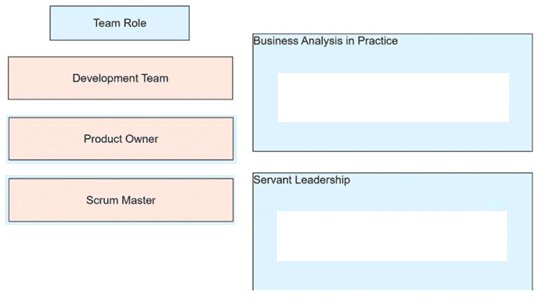
Team Member should get Agile Basics for practical understanding, unlike PO or SM.
Scrum Master obviously needs the Scrum Master Course to manage the process well. Product Owner should definitely get the Agile Fundamentals to understand value delivery. Team Member fits best with Agile Basics since it's more practical and introductory.
new project management office (PMO) manager who had a bad experience with a Scrum approach
recommended that the project board replace Scrum with a predictive approach.
What should the project manager do?
Isn’t it risky to jump into updating plans without confirming the board’s approval first? Maybe the first step should be making sure the change is formally accepted before defining new plans or updating costs.
Option B also makes sense since if the approach changes, the benefits realization plan must reflect new costs and outcomes. It’s important to consider the financial impact early on before committing to a switch.
solution will no longer be on the premises, but in the cloud. The cloud transition will require
additional infrastructure resources and adherence to new security standards.
What should the project manager do first?
Option D to get security specifics first before pushing any change requests.
D It’s crucial to understand security standards before making any formal changes.
points. It was agreed that each story point would be assumed to be equal to one day of effort during
project execution. There are some activities estimated as two story points and others estimated as
100 story points.
What should the project manager ask the team to do next?
Not B, because resizing only helps if the scale is already consistent. The huge difference between 2 and 100 points suggests the big tasks should be broken down (D) to get more manageable estimates.
D The huge difference between 2 and 100 points shows the big tasks need splitting so they’re manageable and estimations are more reliable. Smaller pieces are easier to track and complete.
communications network in many rural areas. The project is being executed in stages.
What should the project manager do to ensure that monetized business value is generated as
planned?
Options A and B focus on estimates or specific metrics, but wouldn’t tracking actual benefits at milestones (D) give a clearer picture of real progress? Wouldn’t that be more reliable than assumptions?
D seems right since real benefits at milestones reflect progress better than just estimates.
valid concern to the project team, which had to be completed before the release. The vice president
has not participated in other product discussions until now. This additional work resulted in a delay
of the product release.
How should the project manager have handled this situation earlier in the project?
B imo, because logging potential issues in the risk register would’ve flagged possible delays early on. That way, the team could’ve prepared or mitigated the impact before the VP’s concern caused a holdup.
It’s definitely not C because escalating dissent immediately doesn’t solve the root issue and can create unnecessary conflict. Between A and D, I think A makes more sense since you can’t really share project boundaries effectively with someone who’s not identified as a stakeholder yet. Once the VP is recognized as a stakeholder, the PM would naturally involve them in discussions and clarify scope earlier, preventing surprises later on. So, spotting all potential stakeholders upfront seems like the foundation for managing expectations and avoiding last-minute delays.
master has not scheduled sprints for three packages on the critical path, which is going to cause the
schedule performance index (SPI) to trend toward 0.90 the following month.
What should the project manager do first?
C seems right, gotta know what’s off with the sprint priorities first.
C/D? Gotta confirm scrum master’s understanding before escalating.
DRAG DROP Drag the communication event on the left to the main subject discussed during the event on the right. 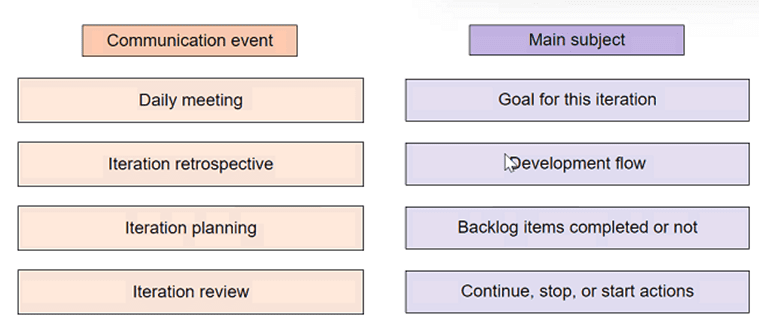
The progress report fits with project status updates since it tracks how the project is doing overall. The change control meeting clearly deals with change requests and managing plan changes.
For me, the change control meeting obviously ties to managing change requests since that's its main focus—handling scope or plan changes. The lessons learned session makes sense with project closure because it wraps up what went well or not. So, even without detailed image info, these pairings feel right based on typical project processes.
notified that an important team member will leave the project for a few weeks due to some urgent
personal issues. What should the project manager do regarding the activities that were the
responsibility of this team member?
A/C? While involving the team (A) feels right because they understand the work, sometimes you might need management input (C) if the absence seriously impacts key deliverables or deadlines. Hiring a substitute (B) usually takes too long to be practical mid-iteration, and forcing someone to stay (D) isn’t an option. But I guess the best immediate step is still to discuss with the team first and then escalate if needed.
It’s A because the team’s already aware of the work and can quickly reassign tasks. Waiting on management or hiring someone new (B and C) could cause delays. Forcing the member to stay (D) isn’t realistic.
DRAG DROP An agile team is geographically separated across multiple continents, and the project manager is in the process of identifying the tools to manage the communication among the virtual teams. Drag the appropriate tool on the left to each project task on the right. 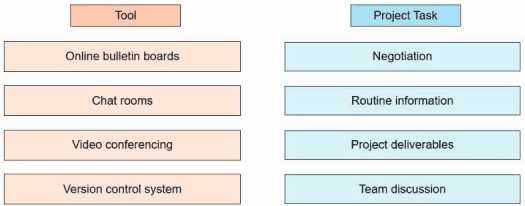
I’d pick file sharing for document collaboration tasks, it keeps versions clear and accessible.
I’m thinking video conferencing should go with tasks needing real-time, rich interaction like status meetings or discussions, because you get facial cues and immediate feedback. Instant messaging tools are best for quick questions or clarifications that don’t need a full meeting—keeps things moving without delays. Email works well for formal updates and tracking decisions since it creates a paper trail. File sharing is obvious for collaborative work on documents or deliverables. Matching based on communication needs and tool strengths seems like the way to go here.
backlog, still need to be refined and prioritized.
What should the project lead use for backlog refinement considering the sprints are 2 weeks long?
I think C makes the most sense here. Prioritizing stories that matter most each sprint ensures the team’s always working on the right things next. Waiting three sprints or focusing just on big story points could risk missing shifts in priorities or tackling huge tasks too late. Plus, a 60-minute slot every sprint feels manageable for steady refinement without getting overwhelmed.
It’s A for me. While C focuses on priority, A targets stories with higher story points, which usually represent bigger or more complex tasks needing early attention to avoid surprises. Also, having a consistent 60-minute session every sprint fits well within a 2-week sprint cycle, keeping refinement manageable and timely. Waiting three sprints (like B or D) feels too infrequent and could lead to backlog items not being ready when needed. Prioritizing by story points can help balance the workload and avoid last-minute rushes on big tasks.
phase. The project relies heavily on the presence and availability of certain products and services,
which are provided at various periods throughout the project phases by selected third-party vendors.
What should the project manager do to ensure the successful execution of the project?
Maybe D could work because the project manager might not have full authority over vendor selection, so relying on procurement experts to follow established processes ensures the right vendors are chosen without causing delays. Since the project is already in execution, selecting vendors probably happened earlier, and now it’s about making sure vendors meet their commitments. So having procurement handle vendor selection might keep things streamlined while the project manager focuses on execution and monitoring.
This one feels like A for me too. Since the project is already in execution, the PM needs to keep monitoring procurement activities to prevent delays or issues, not just wait for problems to happen and then react with B. Plus, C and D seem more relevant during earlier phases like planning or selection, not execution. So, ongoing procurement control checks (A) is the way to go here.