Free CompTIA CloudNetX CNX-001 Actual Exam Questions
Dumps Box (DumpsBox) offers up-to-date practice exam questions for -CNX 1.00 certification exam which are developed and validated by CompTIA subject domain experts certified in CompTIA CloudNetX CNX-001 . These practice questions are update regularly as we keep an eye on any recent changes in -CNX 1.00 syllabus, and when there is update our team quickly adjusts the questions. This commitment to providing the best quality exam prep material to certification aspirants is what makes DumpsBox.com the best certification exam prep website. On top of that, our strong, yet strictly moderated, community based feedback keeps the content clean and current. Each question has helpful community discussion that provides it extra perspective and introduces helpful resources for better exam preparation. This also saves students from other outdated practice questions or illicit exam dumps that can have adverse affects on career. Browse through our CompTIA CloudNetX CNX-001 exam questions and pass your exam on first try.
HOTSPOT New devices were deployed on a network and need to be hardened. INSTRUCTIONS Use the drop-down menus to define the appliance-hardening techniques that provide the most secure solution. If at any time you would like to bring back the initial state of the simulation, please click the Reset All button. 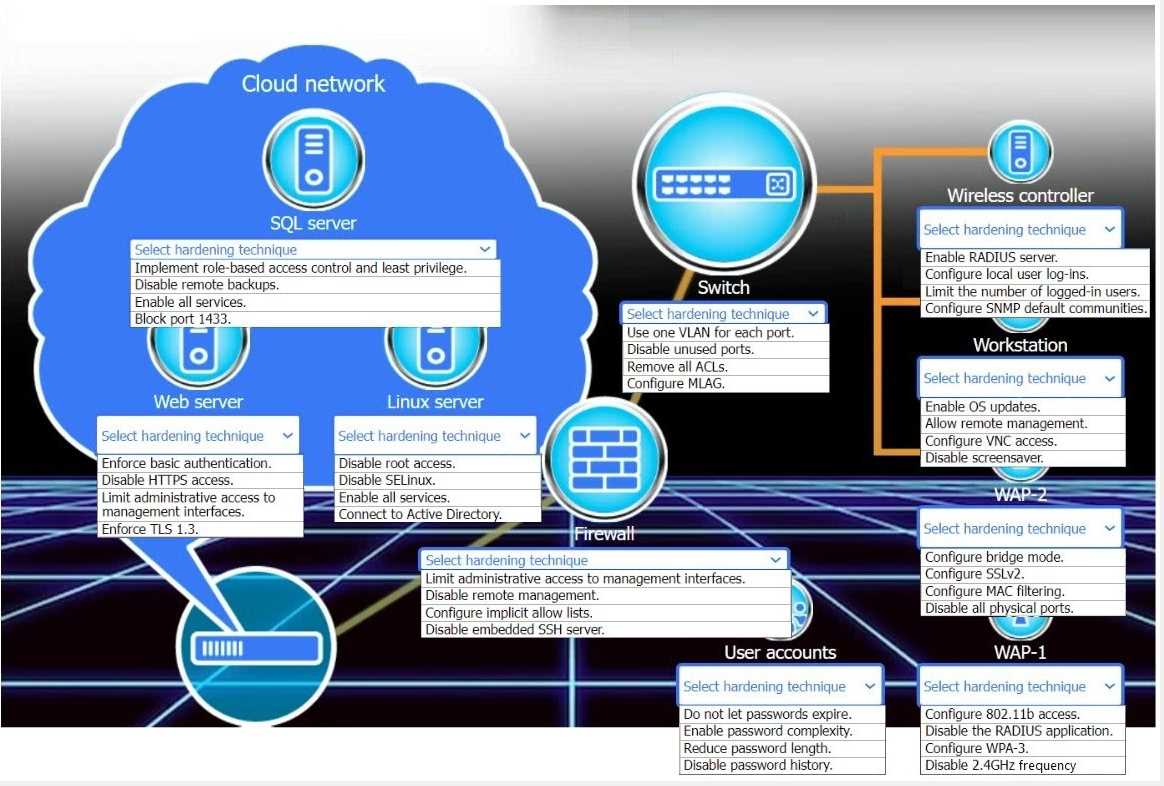
D and B make sense since logging tracks issues and disabling unused services cuts risks.
Disabling unused services definitely lowers risk by shutting down possible exploits. Pairing that with enabling logging makes sense to catch any weird activity early on. Firmware updates could be tricky depending on policies.
SIMULATION
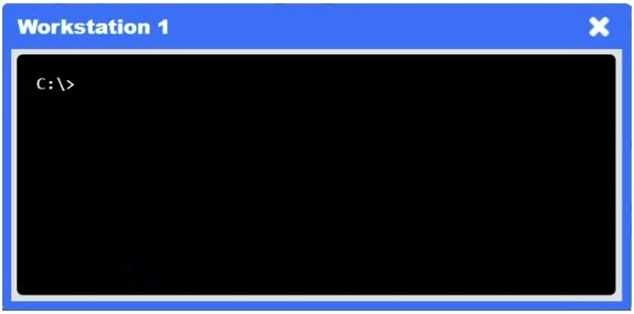
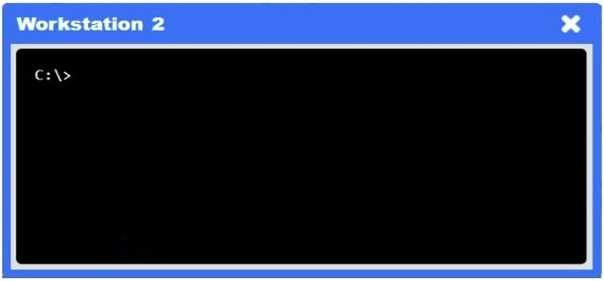
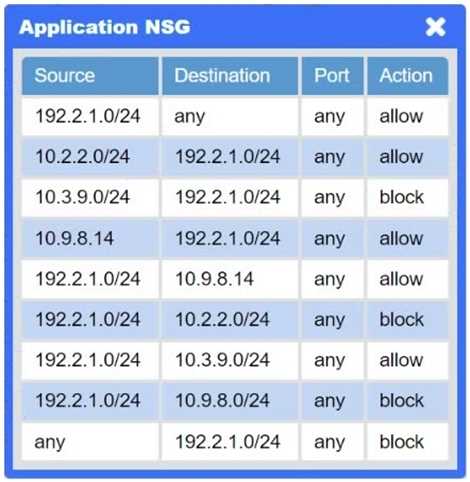
A network administrator needs to resolve connectivity issues in a hybrid cloud setup. Workstations and VMs are not able to access Application
A. Workstations are able to access Server B.
INSTRUCTIONS
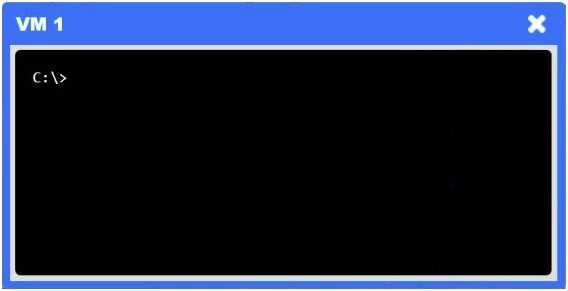
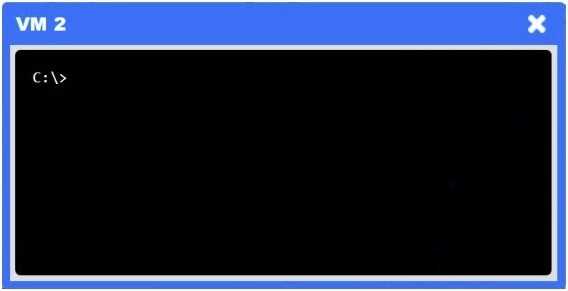
Click on workstations, VMs, firewalls, and NSGs to troubleshoot and gather information. Type help in the terminal to view a list of available commands.
Select the appropriate device(s) requiring remediation and identify the associated issue(s).
If at any time you would like to bring back the initial state of the simulation, please click the Reset All button.
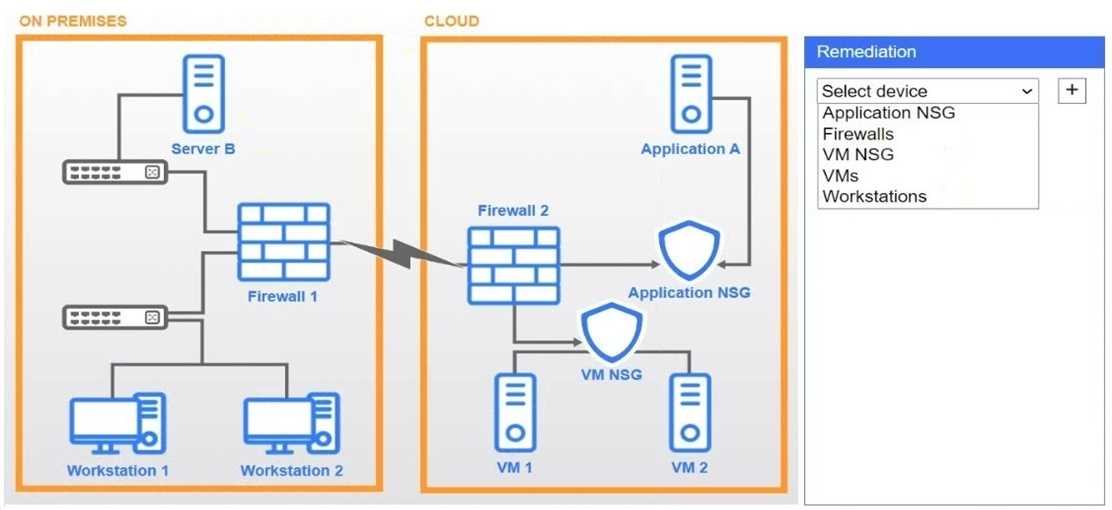
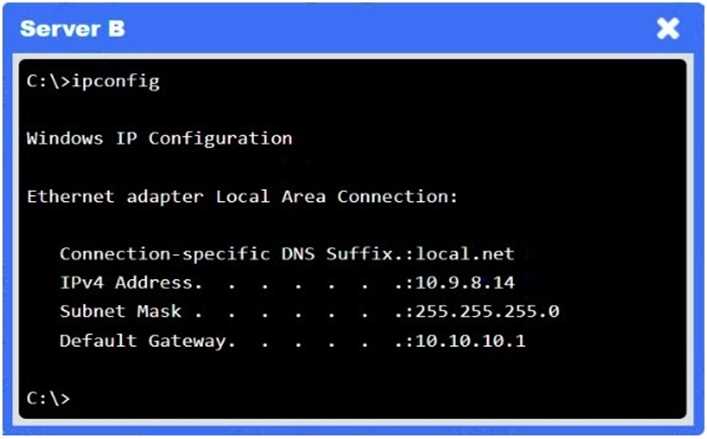
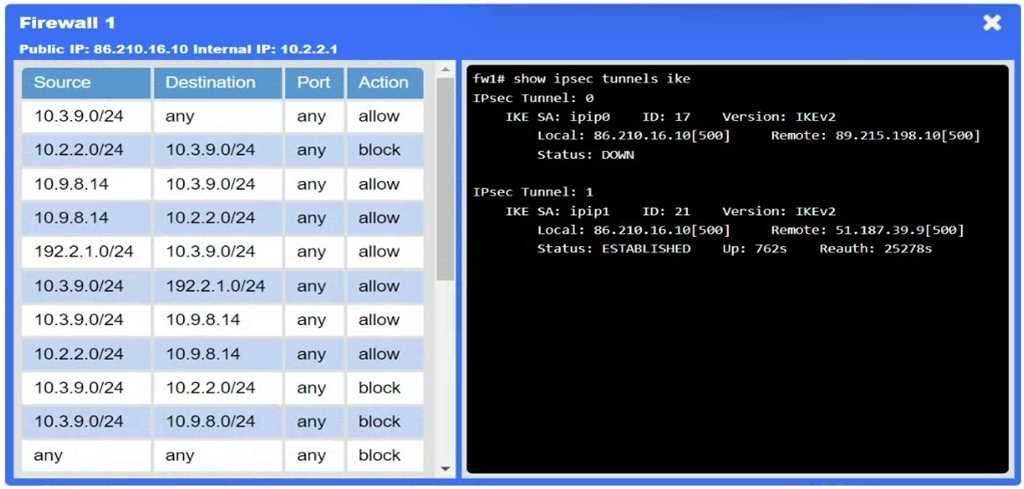
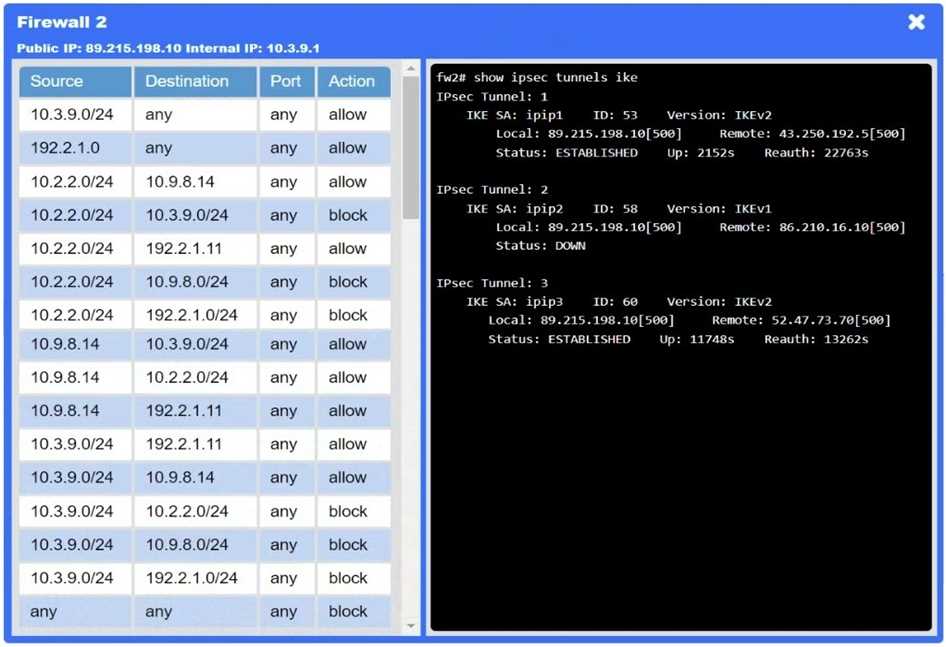
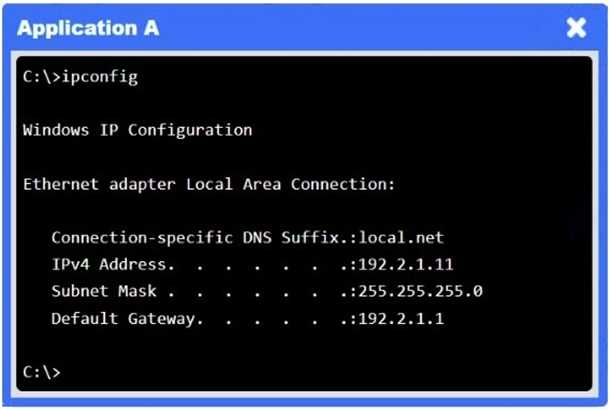
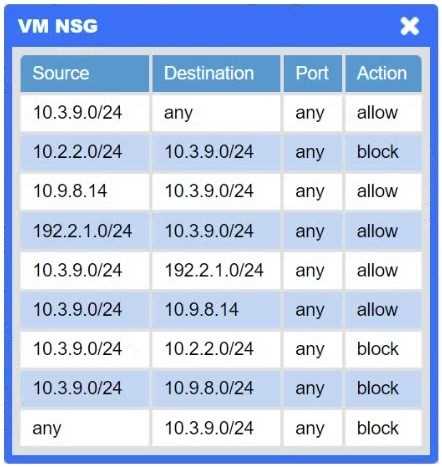
I’d check the routing table too—maybe traffic to App A’s IP is getting misrouted or dropped before hitting the VM subnet. NSGs aren’t the only place where connectivity can break.
If workstations can reach Server B but not App A, NSG rules on the VM subnet might be blocking those
HOTSPOT -
You are designing a campus network with a three-tier hierarchy and need to ensure secure connectivity between locations and traveling employees.
INSTRUCTIONS -
Review the command output by clicking on the server, laptops, and workstations on the network.
Use the drop-down menus to determine the appropriate technology and label for each layer on the diagram. Options may only be used once.
Click on the magnifying glass to make additional configuration changes.
If at any time you would like to bring back the initial state of the simulation, please click the Reset All button.


I agree with the general breakdown but want to add that the core layer usually doesn’t deal directly with VLANs or security policies—it’s more about fast, reliable transport. So if one device is mostly routing and applying security controls, it’s probably distribution. Also, access layers are typically where you see end devices connected, with port security or 802.1X features enabled. If any of the devices show those commands or role-based access control configs, that helps confirm access layer. So double-check those details in the output to make sure the labeling matches these roles.
A seems like access, since it probably connects end-user devices directly.
fans, the stadium owners want to implement a new wireless system. Currently, all tickets are
electronic and managed by the stadium mobile application. The new solution is required to allow
location tracking precision within 5ft (1.5m) of fans to deliver the following services:
Emergency/security assistance
Mobile food order
Event special effects
Raffle winner location displayed on the giant stadium screen
Which of the following technologies enables location tracking?
B imo, BLE is designed for indoor positioning and can easily meet the 5ft accuracy requirement. SSID and IoT are too broad or indirect, and NFC’s range is way too short for this use case.
B/C? BLE definitely fits the precision and range needed here, plus it supports continuous tracking without requiring direct user interaction. NFC’s range is too limited for anything beyond point-of-contact interactions, so it seems unlikely to cover all these use cases. IoT is more of an umbrella term for connected devices, not a specific tracking tech. SSID doesn’t provide location info. So between B and C, BLE makes more sense given the proximity accuracy and practical implementation in stadiums.
manufacturing company's warehouse. The engineer needs an authentication mechanism for these
scanners that uses the Wi-Fi network and works with the company's Active Directory. The business
requires that the solution authenticate the users and authorize the scanners. Which of the following
provides the best solution for authentication and authorization?
B imo, since TACACS+ is mainly for device admin access, not user Wi-Fi auth. For network access and tying into Active Directory on Wi-Fi, RADIUS is the typical go-to.
RADIUS is the standard for Wi-Fi authentication with Active Directory integration.
applications across the enterprise to perform decision-making analytics. Which of the following
technologies is the best way to fulfill this purpose?
D, since it's designed to store all types of data for analytics at scale.
It’s D because relational databases (A) can’t efficiently handle the massive, varied data from global apps like a data lake can. The other options don’t fit the logging and monitoring use case either.
A user reports an issue connecting to a database server. The front-end application for this database is hosted on the company's web server. The network engineer has changed the network subnet that the company servers are located on along with the IP addresses of the servers. These are the new
configurations:
- New subnet for the servers is 10.10.10.64/27
- Web server IP address is 10.10.10.101
- Database server IP is 10.10.10.93
Which of the following is most likely causing the user's issue?
It’s B because if the database server’s firewall wasn’t updated for the new subnet, it might block connections even if IPs look right. That’s an easy miss after changing subnets.
Maybe D. The web server’s IP is outside the 10.10.10.64/27 subnet range, so it probably can’t route traffic correctly to the database server at 10.10.10.93.
dependencies between application and database tiers in the environment. Which of the following
should the engineer reference in order to best meet this requirement?
A imo, knowledge base articles often have the most current and detailed info on specific application setups, especially right after a migration when things might not yet be fully reflected in official databases. CMDBs are ideal for structured dependency mapping but can lag behind real-time changes. Since they’re asking about dependencies between app and database tiers, the internal knowledge base might capture those nuances better than the CMDB if it’s not fully updated for the cloud environment yet. Plus, things like SOW or physical diagrams don’t really cover those relationships directly.
I think B is still the best call because a CMDB is designed specifically to map out relationships between components, including apps and databases, unlike the other options that don’t track dependencies clearly.
causing unscheduled outages. Which of the following best mitigates this risk?
B imo, because having the author’s code reviewed directly tackles mistakes before they hit production, especially if CI/CD isn’t fully set up yet. It’s a simple step that can catch errors early.
D, automation in CI/CD ensures consistent checks before deployment.
segmented into different network sections. All external inbound traffic must be blocked to those
servers. Which of the following need to be configured to appropriately secure the cloud network?
(Choose two.)
D is not needed because blocking outbound traffic to everywhere isn’t required here. A for allowing specific server access inside the cloud and C for denying external inbound traffic makes the most sense.
A/C? A is necessary for access between the servers. C denies all inbound traffic from outside, which fits the requirement to block external inbound traffic without messing with internal flows.
host the APIs. During peak hours, the company notices a spike in usage that results in network
communication speeds slowing down for all customers. The management team has decided that
access for all customers should be fair and accessible at all times. Which of the following is the most
cost-effective way to address this issue?
It’s C because throttling controls usage per customer, keeping access balanced without extra infrastructure.
It’s C for me. Throttling ensures no single customer can overload the system, so everyone gets fair access without needing to throw more money at extra VMs. Increasing VMs (B) can get pricey and might not solve fairness if some users still abuse the system. Also, changing MTU (D) won’t help with fairness or slowdowns caused by too many requests. An allow list (A) could block some users but isn’t really “fair” access. So throttling is the most cost-effective way to keep things balanced during peak times.
running on the 2.4 GHz band and on the same channel. Connecting to each Wi-Fi network yields slow
performance. Which of the following channels should the networks be configured to?
A/B? Since they’re using the same channel now, switching to different ones with minimal overlap should help. A’s channels (1, 2, 3) are too close and will overlap a lot, causing interference. B’s channels (2, 4, 9) are spaced out better than A but still not ideal because 2 and 4 overlap. C’s channels (1, 6, 11) are well-known non-overlapping choices, but since that’s already mentioned a lot, B could be considered if C is somehow not allowed. D’s channels overlap too much. So, if C isn’t an option for some reason, B might be a secondary choice.
C, only those three channels avoid overlap in 2.4 GHz Wi-Fi.
from certain locations. The network team configures a cloud firewall with WAF enabled, but users
can access the application globally. Which of the following should the network team do?
D. Since the goal is to limit access based on geographic location, geo-restriction is the most direct and effective method. WAF rules mainly handle threats and traffic patterns, not location-based blocking. NAT gateway or CDN won’t restrict where users connect from either, so they’re irrelevant here. Geo-restriction is designed for precisely this use case.
A/D? WAF rules might need tuning if geo blocks aren’t working as expected.
the company needs to achieve a high level of reliability and high availability for the connection
between its data center and the cloud provider. Which of the following solutions best meets the
requirements?
It’s C because relying on two different suppliers for Direct Connect avoids vendor lock-in and single points of failure, which is crucial for meeting strict reliability and availability requirements.
B/C? If the VPN backup is reliable enough, B’s simpler setup might be enough for high availability. But if the regulations are strict about avoiding any single vendor risk, C seems safer with two different suppliers.
application will be based on the end users' role. In addition, the host must be deployed on the
192.168.77.32/30 subnet. Which of the following Zero Trust elements are being implemented in this
design? (Choose two.)
A and C, since roles limit access and a small subnet hints at segmenting the network.
A imo, role-based access is all about least privilege. For the subnet part, C fits since restricting to a small subnet is a basic form of microsegmentation, even if not super detailed here.