Free Microsoft Power Platform PL-400 Actual Exam Questions
Dumps Box (DumpsBox) offers up-to-date practice exam questions for PL-400 certification exam which are developed and validated by Microsoft subject domain experts certified in Microsoft Power Platform PL-400 . These practice questions are update regularly as we keep an eye on any recent changes in PL-400 syllabus, and when there is update our team quickly adjusts the questions. This commitment to providing the best quality exam prep material to certification aspirants is what makes DumpsBox.com the best certification exam prep website. On top of that, our strong, yet strictly moderated, community based feedback keeps the content clean and current. Each question has helpful community discussion that provides it extra perspective and introduces helpful resources for better exam preparation. This also saves students from other outdated practice questions or illicit exam dumps that can have adverse affects on career. Browse through our Microsoft Power Platform PL-400 exam questions and pass your exam on first try.
HOTSPOT You need to select data types for required fields. Which data types should you use? To answer, select the appropriate options in the answer area. NOTE: Each correct selection is worth one point. 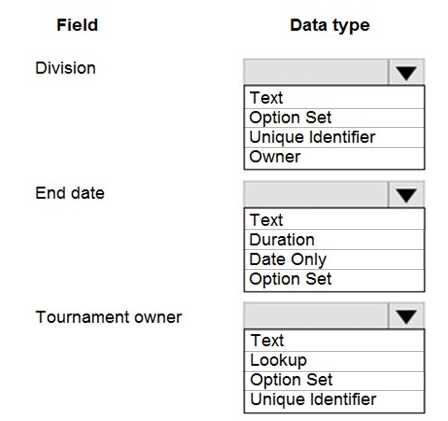
I’m thinking options B and C make more sense here. Both represent data types that naturally fit required fields—B’s whole number type and C’s date/time type are commonly used with mandatory values. The others might allow nulls by default or aren’t as strict about enforcing data presence, so they don’t seem like the best picks for required fields without extra constraints.
B and D make sense since required fields shouldn't allow nulls.
HOTSPOT You need to design functionality to process background check results. What should you implement? To answer, select the appropriate options in the answer area. NOTE: Each correct selection is worth one point. 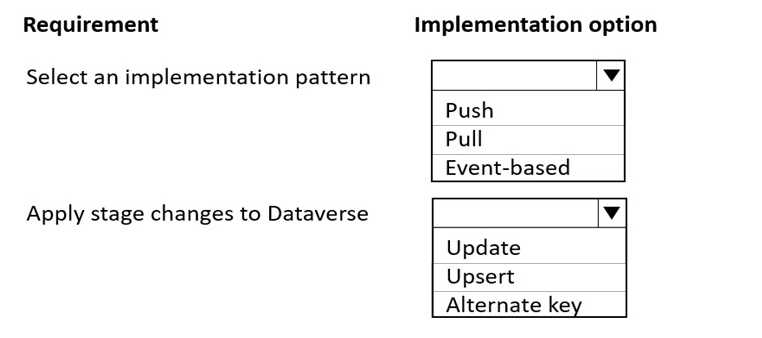
I’d rule out A since doing manual checks defeats the purpose of automation here. If the system has event triggers, B makes sense to capture changes instantly instead of waiting for scheduled pulls.
I’m thinking options B and D make sense here too, but for a different reason. If the background check system updates a record when it’s done, you want something that reacts automatically (like a trigger in B) and also a way to update the status visibly (D). Polling or batch jobs don’t fit well since you want real-time or near real-time processing. Also, A feels off because it’s more about manual queries than automation. So, event-driven updates plus status tracking should cover the needed functionality.
DRAG DROP You have several model-driven apps. You must ensure that app creators and system administrators can customize the apps. You must follow the principle of least privilege. You need to assign the permissions that are needed for app creators and system administrators. Which security roles should you assign? To answer, drag the appropriate roles to the correct requirements. Each role may be used once, more than once, or not at all. You may need to drag the split bar between panes or scroll to view content. NOTE: Each correct selection is worth one point 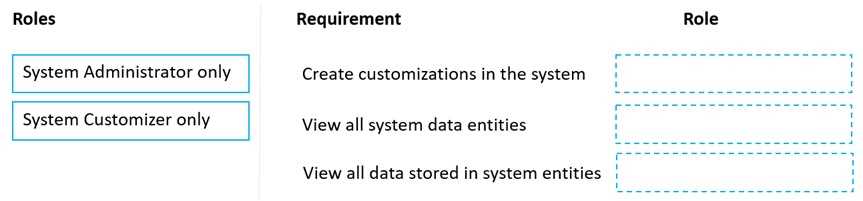
System administrators clearly need the System Administrator role for full control. For app creators, the Environment Maker role is ideal since it allows customization but limits broader access, aligning with least privilege.
System admins should have the System Administrator role—no question there. For app creators, the Environment Maker role makes sense because it allows customization without full admin rights, keeping with least privilege.
You must use an Azure Function to update the other system. The integration must send only newly
created records to the other system. The solution must support scenarios where a component of the
integration is unavailable for more than a few seconds to avoid data loss.
You need to design the integration solution.
Solution: Register a service endpoint in the Dataverse instance that connects to an Azure Service Bus
queue.
Register a step at the endpoint which runs asynchronously on the record's Create message and in the
post-operation stage.
Configure the Azure Function to process records as they are added to the queue.
Does the solution meet the goal?
Option A seems right since async steps queue up create events, so no data loss if Azure Function is down. Plus, only new records trigger the create message, matching the requirement.
A. Using an async step with a service bus queue means messages aren't lost if the function is down temporarily, so this should handle downtime well and send only new records.
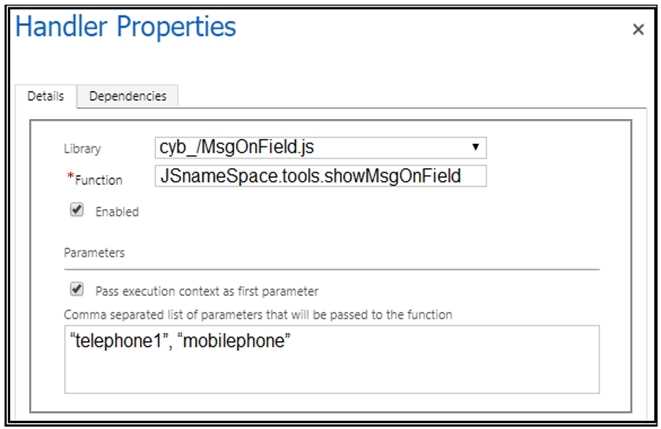
HOTSPOT A JavaScript function on a Contact form alerts users to what they need to type, as shown in the JavaScript Code exhibit. (Click the JavaScript Code tab.) 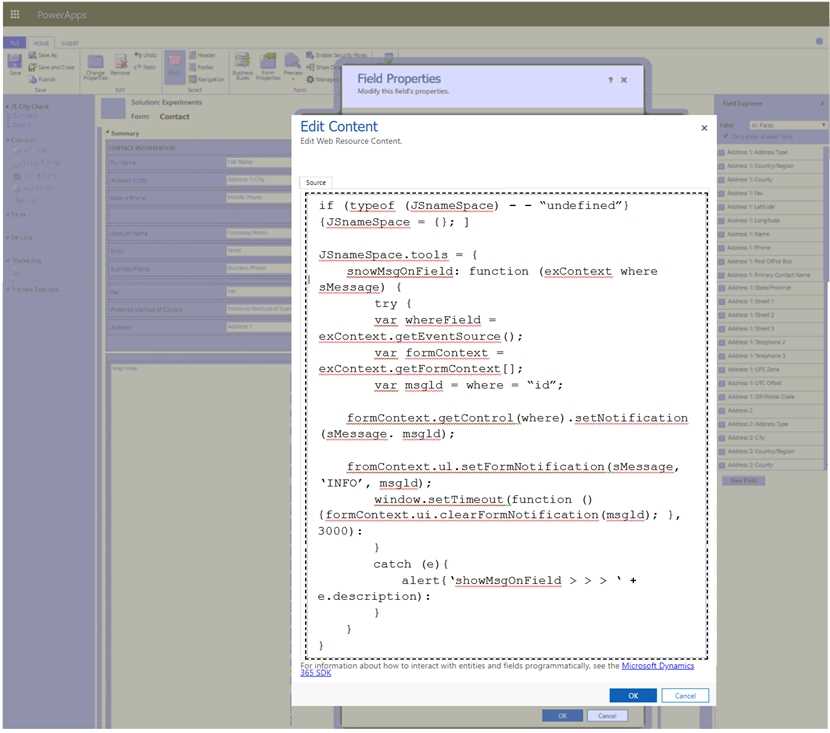 The Business Phone field has the OnChange event handler defined as shown in the Event Handler exhibit. (Click the Event Handler tab.)
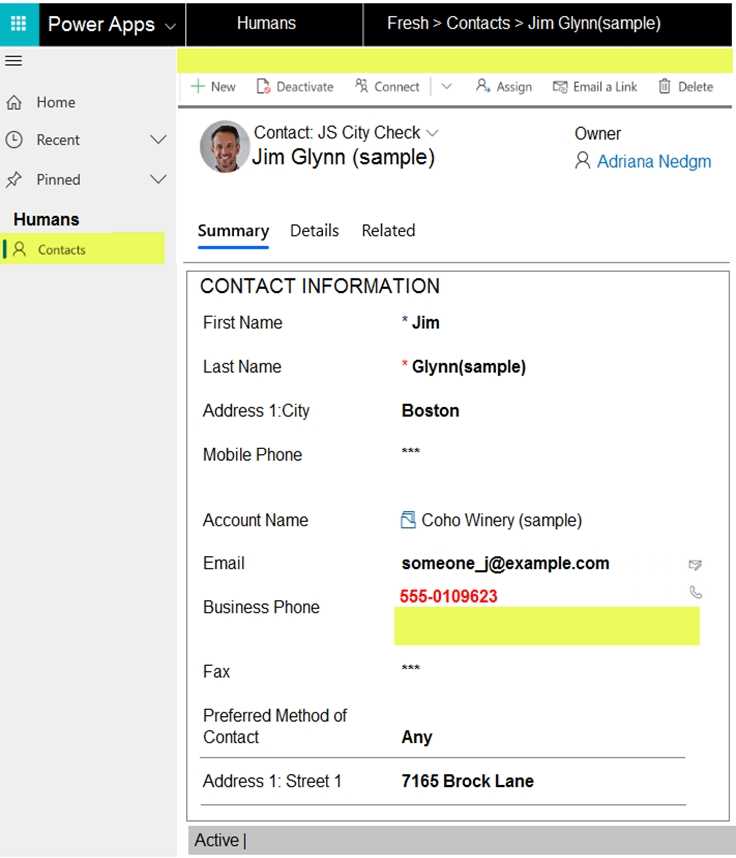
  Users report that there is incorrect wording on the Contact page, as shown in the Contact exhibit. (Click the Contact tab.)
  You need to determine what happens when a user modifies the business phone of a contact record. For each of the following statements, select Yes if the statement is true. Otherwise, select No. NOTE: Each correct selection is worth one point.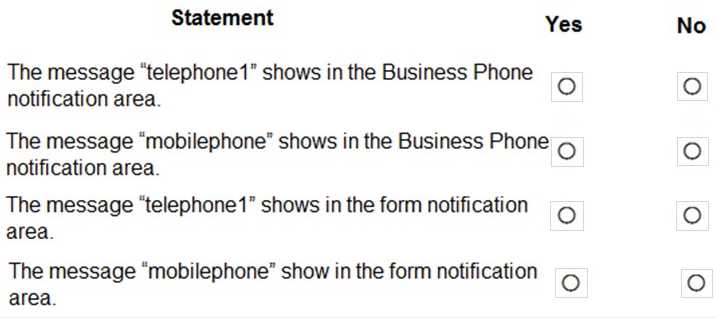
The alert definitely uses a fixed string, so it won’t adjust if the label changes on the form. That explains why users see the wrong wording after updating the field label.
Another angle is that the OnChange event is only triggered after the field loses focus, so users might not see the alert immediately while typing. Also, since the alert message is hardcoded, it won’t reflect any label changes made on the form, causing that mismatch. So even if the phone number is entered correctly, the alert still pops up with outdated wording, which can confuse users. This suggests the issue is both about when the event fires and how the message is constructed in the code.
Which expression should you use?
It’s A, seems straightforward to add weeks to CreatedOn.
DRAG DROP You need to identify why employees are not receiving notification that nine customers are checked in and waiting in the repair area. Which components should you test for each step? To answer, drag the appropriate components to the correct steps. Each component may be used once, more than once, or not at all. You may need to drag the split bar between panes or scroll to view content. NOTE: Each correct selection is worth one point. 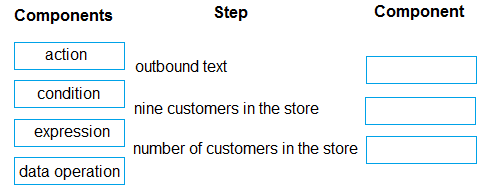
I think it makes sense to verify the data source that tracks customer check-ins first, then check the flow logic that triggers notifications. If the data isn’t capturing the nine customers correctly, notifications won’t send.
Also consider testing the filtering condition that checks if exactly nine customers are present.
The app must monitor submissions of resumes.
You need to parse the resumes and save contact and skills information into the Common Data
Service.
Which mechanism should you use?
B imo, a plug-in can run immediately on record creation to parse and save data automatically.
Option A
DRAG DROP A travel company has a Common Data Service (CDS) environment. The company requires the following: Custom entities that track which countries/regions their clients have traveled. The dates their clients traveled to these countries/regions. You need to create the entities and relationships to meet the requirements. Which three actions should perform in sequence? To answer, move the appropriate actions from the list of actions to the answer area and arrange them in the correct order. NOTE: More than one order of answer choices is correct. You will receive credit for any of the correct order you select. 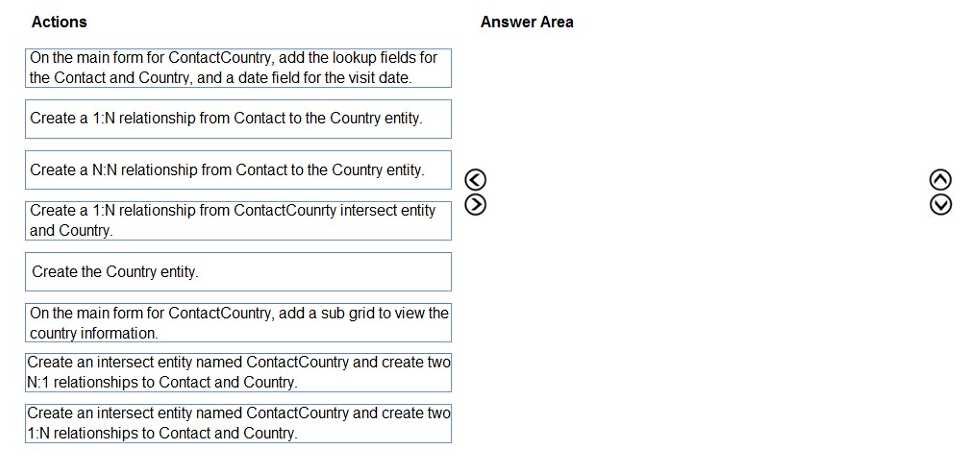
If client and country entities are already there, start by creating the travel entity to hold the dates. Then set up one-to-many relationships from travel to client and travel to country. That way, each travel record links properly to both.
Creating entities first then linking travel to client and country makes sense.
HOTSPOT You develop the following code for the plug-in that sends email notifications to recruiters. 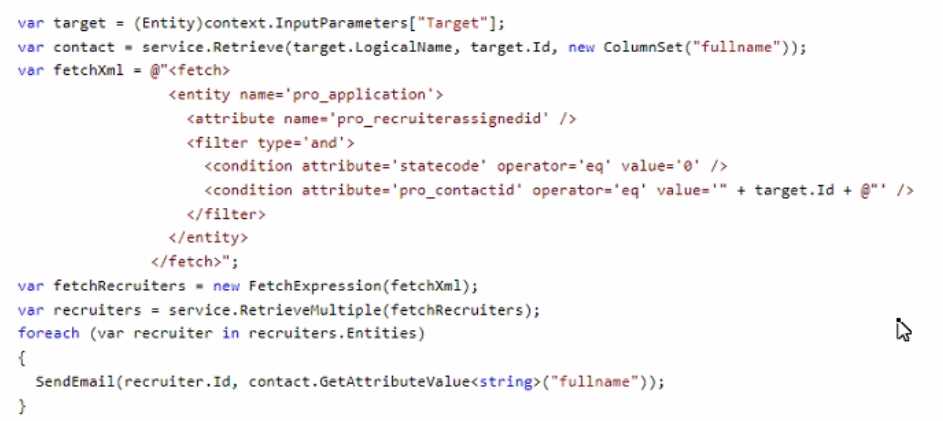 For each of the following statements, select Yes f the statement is true. Otherwise, select No NOTE: Each correct select in worth one point.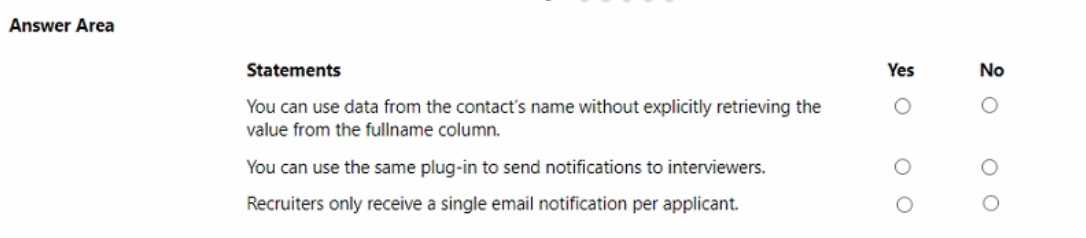
Also noticed the method calls SendEmailNotification without awaiting or any async handling, so it might not finish before the rest of the code runs. That means the whole operation isn’t guaranteed to complete fully, which supports saying no to atomicity. Plus, no visible error feedback means if sending the email fails, nothing stops or compensates for that failure. So, both on error handling and atomicity, I’d say those statements aren’t true based on this snippet.
I’m thinking the statement about the code handling failures gracefully is likely a no. There’s no visible error handling or retry logic in the snippet, so if sending the email fails, it probably won’t recover or notify the caller. Also, since there’s no transaction, partial updates could happen if some steps succeed and others fail. So, definitely not fully robust in that sense.
DRAG DROP You are creating an input control to format telephone numbers for a canvas app. The control must be reusable in other canvas apps inside your company. Any updates must be able to be applied without editing the control in each canvas app. You need to create the control. Which three actions should you perform in sequence? To answer, move the appropriate actions from the list of actions to the answer area and arrange them in the correct order. 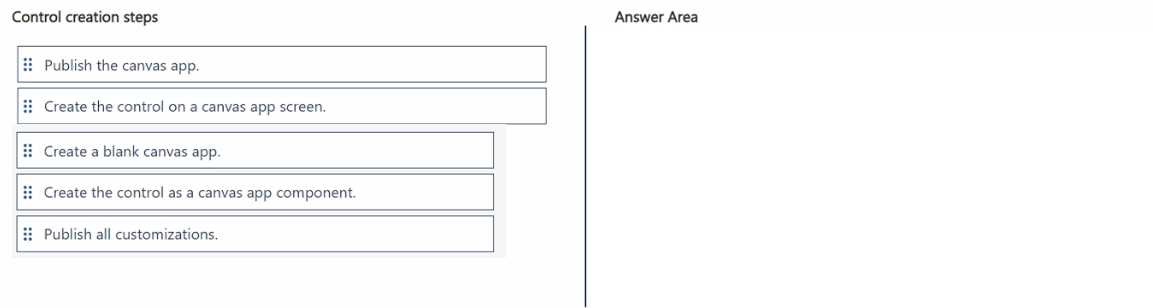
Start by creating a reusable component, then save it to the library.
Create the component, save to library, then use in apps for updates.
Which code segment should you use?
B/D? B removes a handler, and D looks off syntax-wise for this context.
Maybe A. The question is about populating data when the form loads, so adding a function on load feels right. C’s more about saving, which doesn’t match the goal here.
HOTSPOT An organization has a custom Assignments entity that guides agent actions. Team leaders for each assignment group must be able to review any changes made to assignment data by their agents. You have the following JSON segment: 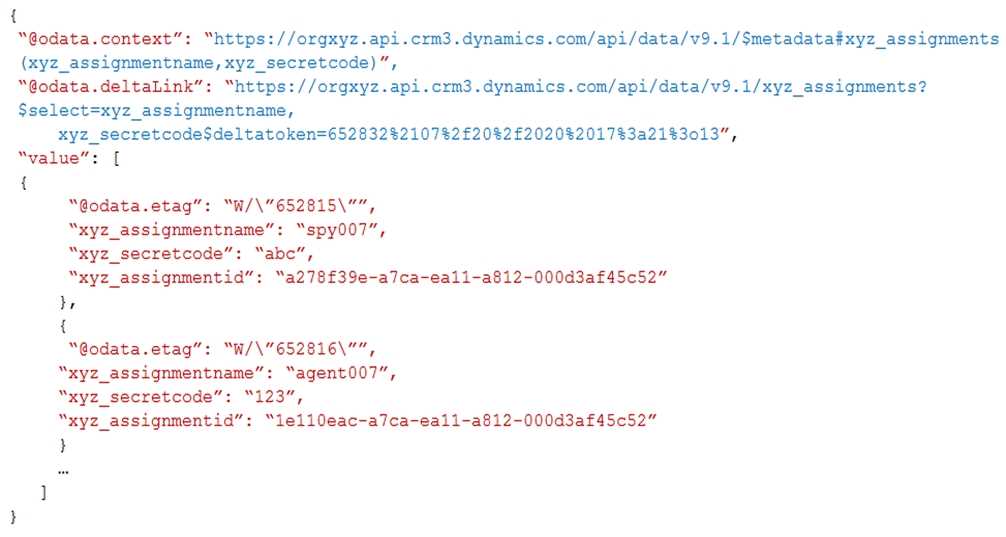 For each of the following statements, select Yes if the statement is true. Otherwise, select No. NOTE: Each correct selection is worth one point.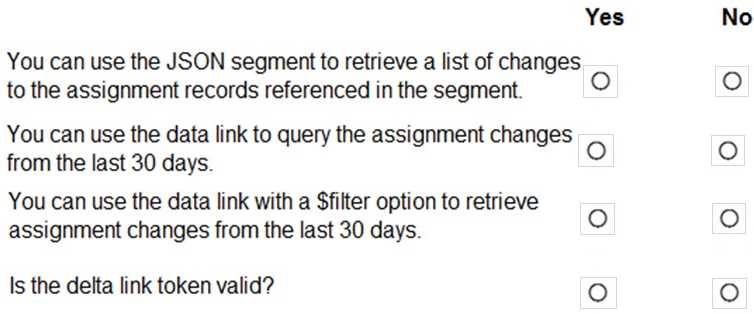
I’m thinking the JSON mainly sets up auditing on the Assignments entity but doesn’t cover who can see the audit history. Since team leaders need to review changes, there should be some explicit permission or role in the JSON for that. Without a property granting read access to the audit logs or linking team leaders to that permission, I’d say they can’t review changes just based on what’s shown. So, any statement saying team leaders have access to review changes would be false here.
No, the JSON shows auditing but no direct access control for team leaders.
A company plans to create an order processing app. When orders are created, the app will perform complex business logic and integrate with several external systems. Orders that have a large number of line items may take up to six minutes to complete. Processing for each order must be completed in one operation to avoid leaving records in an incomplete state. You need to recommend a solution for the company. What should you recommend?
Option A could work since custom workflow activities run asynchronously but still within CRM’s transaction scope, helping maintain data integrity without timeout issues that real-time workflows face.
Not B, because real-time workflows have time limits and won’t handle 6-minute processing well. Async plugins (D) might handle long processing but don’t guarantee atomic completion in one operation.
is saved. You need to configure the associated JavaScript web resource name when adding the event
handler to the form. Which field should you use?
D. Library makes the most sense here since that’s where you’d link the JavaScript file with the form event. The other options don’t quite fit for associating the script itself. Anyone else think it’s tricky because both Library and Component could sound like they relate to code?