Free Cisco 300-815 Actual Exam Questions | CLACCM Actual Exam Questions
Dumps Box (DumpsBox) offers up-to-date practice exam questions for 300-815 certification exam which are developed and validated by Cisco subject domain experts certified in Cisco 300-815 | CLACCM . These practice questions are update regularly as we keep an eye on any recent changes in 300-815 syllabus, and when there is update our team quickly adjusts the questions. This commitment to providing the best quality exam prep material to certification aspirants is what makes DumpsBox.com the best certification exam prep website. On top of that, our strong, yet strictly moderated, community based feedback keeps the content clean and current. Each question has helpful community discussion that provides it extra perspective and introduces helpful resources for better exam preparation. This also saves students from other outdated practice questions or illicit exam dumps that can have adverse affects on career. Browse through our Cisco 300-815 | CLACCM exam questions and pass your exam on first try.
advertising some URIs to other clusters with GDPR, but the customer wants to ensure that specific
numbers are advertised. Where under the Cisco UCM Admin page > Call Routing > Global Dial Plan
Replication must that set of numbers be configured?
Probably B, since Advertised Patterns control what specific numbers get shared externally.
I agree that C can be ruled out since learned numbers are about incoming info, not what you push out. Also, D (Route Patterns) mainly controls call routing, not advertisement. So, focusing on what numbers you want to advertise fits best with B, Advertised Patterns. That’s where you specify exactly which numbers the cluster shares via GDPR. Seems the clearest and most direct choice here.
an active call from a mobile phone to a desk phone and vice-vers
a. As an administrator, which additional configuration should be made to fulfill the user’s request?
It’s A because without Extension Mobility, the desk phone can’t properly register the user’s profile, which is needed to handle calls seamlessly between devices. This setup is crucial for call mobility features.
D Adding the mobility key is what actually enables call transfer between the desk and mobile phone. Without it, you can’t initiate the move even if other settings are correct.
SIP trunk receive a ring tone for 20 seconds and then a busy signal instead of voicemail. Which
configuration fixes this problem?
Maybe D—disabling moved-temporarily often fixes voicemail ring-to-busy issues.
Option D seems more plausible here since the problem looks like the SIP moved-temporarily message is causing the call to fail over to voicemail properly. Disabling that supplementary service often stops the call from timing out and giving a busy signal after ringing for a while. The other options don’t directly address the SIP signaling behavior that blocks voicemail. So, turning off the sip moved-temporarily feature is likely the right fix to let calls get forwarded to voicemail without the timeout.
Communications Manager Express?
C. Disabling trusted authentication with the command no ip address trusted authenticate under voice service voip actually helps prevent unauthorized calls by not automatically trusting incoming IP addresses. That stops some types of toll fraud where calls come from untrusted sources. The other options either don’t directly address toll fraud or focus on features that are less relevant for CME specifically.
I think B makes more sense here. Setting IP Address Trusted Authentication forces verification on incoming VoIP calls, which is a solid way to block unauthorized toll calls. Not just about overlap dialing or dial tone. B
The administrator of ABC company is troubleshooting a one-way audio issue for a call that uses H.323 protocol (slow-start mode). The administrator requests that you provide the IP and port information of the Real- Time Transport Protocol traffic that had the one-way audio call. You gather the H.225 and H.245 messages for one of the one-way audio calls. Where can you find the RTP IP and port information for both sides? (Note: This call flow has not invoked any media resources like MTP or transcoders).
B The Open Logical Channel shows the initiating side’s RTP details, so you get the sender’s IP and port right there without needing to wait for the Ack.
It’s B. The Open Logical Channel message kicks off the media stream and definitely includes the sender’s RTP IP and port, which is crucial for identifying where the audio is coming from.
Communications Manager Express gateway to enable phones to be registered via SIP?
Actually, B is necessary first to enable voice features on the router before you can configure SIP registration with C or D. You can’t jump straight to registration commands without enabling voice service.
C/D? C sets the global parameters for SIP phone registration, while D configures each phone’s directory number. The question seems to focus on registration, so C is a solid choice here.
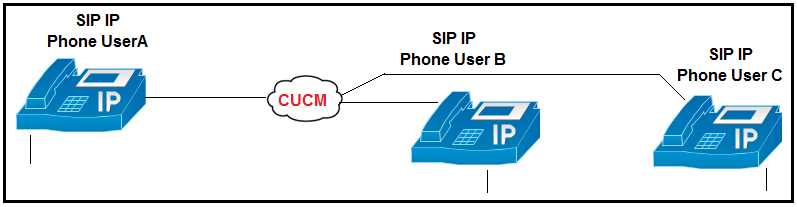
In an active SIP call between phone user A and phone user B, phone A initiates a call transfer to
phone user C. Which two scenarios are correct? (Choose two.)
It’s A and D. Phone_A starts the transfer by sending the REFER, and Phone_B hears MOH from Phone_A’s network hold settings while waiting for Phone_C to answer. That fits standard SIP transfer logic.
B imo. Phone_B is the one receiving the REFER because it’s the party being transferred, so it sends the SIP-REFER message with Phone_C info. That makes more sense than Phone_A sending it.
Refer to the exhibit. 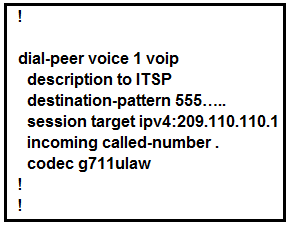 An engineer configures Cisco Unified Border Element to connect the enterprise VoIP network with a SIP telephony provider. Calls are not working in either direction. What must be configured in the dial peer 1 to fix the issue?
D imo, because without the incoming called number configured, the router can’t properly match inbound calls to the dial peer. That would definitely cause calls not to work both ways. The other options feel less likely since codec mismatches usually still allow signaling, and the session protocol looks fine already from the exhibit. So the missing piece is matching the incoming called number for the dial peer.
I’m thinking it’s D this time. If the incoming called number isn’t set correctly on dial peer 1, the router might not know to match inbound calls properly, which would break calls both ways. The other options seem more related to codec or protocol settings, but a missing or wrong incoming called number would definitely stop calls from routing. So, D.
Service? (Choose two.)
Maybe D and C? TLS certificates (C) definitely make sense for secure auth. Passwords (D) are pretty common for basic authentication setups, so I'd consider that a solid pick too. TokenID sounds more like a token-based system rather than a direct auth type itself, and FQDN (E) isn’t really an authentication method, more like a network identifier. Username and secret key (B) feels like it could overlap with password-based methods, but since the question asks for two types, D and C seem like the straightforward choices here.
B/C for sure, TokenID seems more like a token than full auth here.
for a SIP call in real time?
I see why C stands out with “Real Time Data,” but just to add, D clearly involves opening logs from a local disk which means it’s looking at past data, not live. That really narrows it down to C for real-time review. So I’m with C on this one too.
C/B? C obviously handles live data, but B could be relevant since Trace and Log Central might also show real-time logs, though probably not as focused on call flow. Still, C seems more precise here.
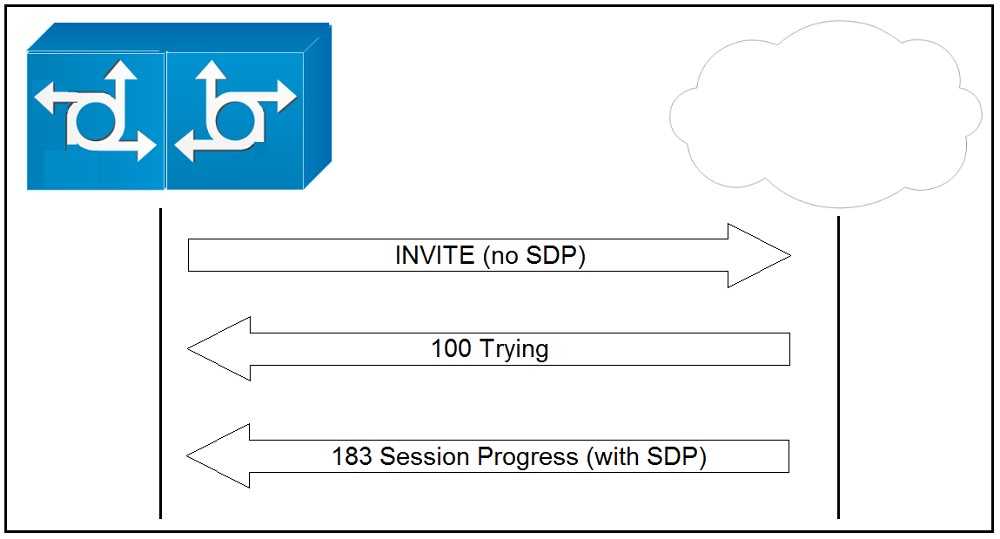
An administrator is troubleshooting why users are not hearing audio when dialing long distance
numbers across their Cisco Unified Border Element. The customer’s carrier has a requirement that
dialing long distance requires an access code to be entered. Looking at the exhibit, what two actions
can be taken to correct signaling? (Choose two.)
B and E seem right; Early Offer triggers media setup early, and Mid-Call Signaling fits access code changes.
C/D? Enabling the supplementary-service media-renegotiate (C) makes sense to handle changes in the call after initial signaling, which fits if the access code triggers a mid-call event. Media Flow Around (D) helps keep media direct between endpoints, reducing delays or drops that might cause no audio. B (Early Offer) is useful but if the carrier needs an access code mid-call, renegotiation could be more critical here. A and E don’t seem directly related to this issue.
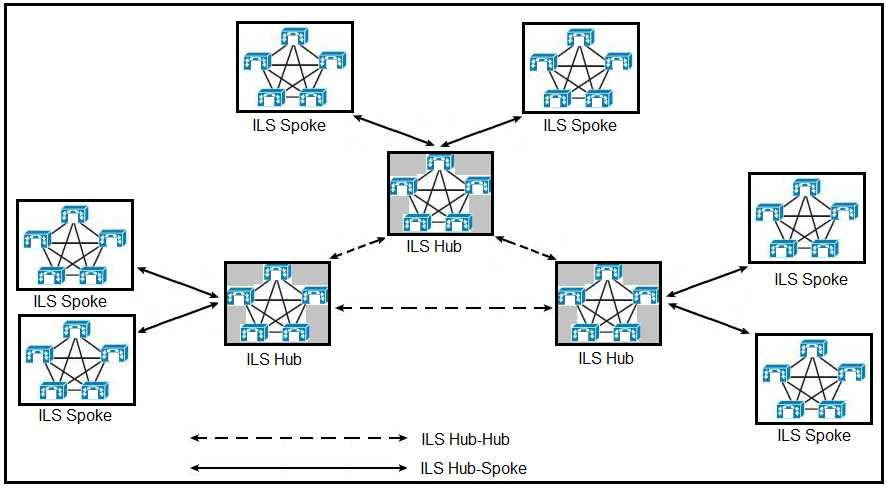
How many maximum hops can an ILS update traverse?
B/C? I’m ruling out A because 3 hops seems too low for modern ILS designs that aim for wider reach. D sounds excessive since 12 hops would likely cause too much delay or instability. Between B and C, 6 is often cited as a practical max, but some docs do mention 9 for certain scenarios. Without more context, I’d go with B just based on common practice.
A/B? I know classic ILS is usually capped at 3 hops to keep things stable, but some newer setups mention 6. So it might depend on the exact ILS type the question implies.
which two devices? (Choose two.)
Option C and D seem right here. The Dialed Number Analyzer is mostly used to troubleshoot calls involving CTI ports and route points, which act as control points in the call path. Translation patterns and device pools don’t really fit since they’re more configuration elements than devices that make or receive calls. IP phones are endpoints but I doubt the tool analyzes them directly without going through CTI devices first. So C and D stand out as the best choices.
C, D The Dialed Number Analyzer mainly deals with CTI devices for call analysis, so CTI ports and route points make the most sense here. IP phones aren’t the direct sources it analyzes.
routing the call through the PSTN? (Choose two.)
Maybe A and C. The AAR destination mask handles routing after denial, and the external phone number mask changes the number format for PSTN calls. The +E.164 mask feels more about dialing plans than rerouting.
A vs D? The AAR destination mask is for rerouting definitely, and the +E.164 alternate number mask sounds right for formatting the PSTN number after reroute. External phone number mask seems less about denial routing.
notified about the call?
I see where you’re coming from with D, but I’d say A ALERTING fits better if we think about the signaling flow. ALERTING is sent when the network notifies the caller that the called party is being alerted, so it’s the first signal that the call is reaching the other end. RINGING (D) usually means the phone is actually ringing, but that’s more of a user-level state. ALERTING happens just before that, so it’s more precise for "being notified" in call setup.
I’m going with D here. RINGING usually means the phone is actually ringing at the called party, so they’re getting notified right then. ALERTING (A) tends to be more about the network telling you the call is progressing, not that the user’s device is actively notifying the person yet. So D feels like the clearer choice if we’re talking about the user being alerted.