Free Microsoft Power Platform PL-200 Actual Exam Questions - Question 11 Discussion
HOTSPOT You manage the Dynamics 365 environment for a company. You need to ensure that there are no leads for a customer before you create a new opportunity for the customer. How can you use duplicate detection rules to achieve this goal? To answer, select the appropriate options in the answer area. NOTE: Each correct selection is worth one point. 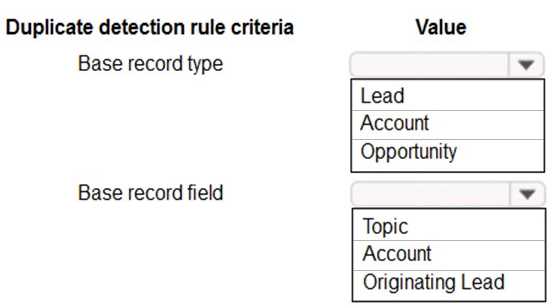
I’m thinking the rule should be triggered on creating or updating leads, not opportunities, so options focused on leads (like D) make more sense. You wanna catch duplicates before the opportunity stage, not after.
Option D makes sense since enabling duplicate detection on leads catches existing leads before new opportunities.
I think option D fits better since you want to catch duplicates specifically in leads before creating an opportunity, so enabling the rule on leads makes more sense than on opportunities. Also, using a unique customer field is key.
I’d say B makes sense since using email as the matching criteria works well for identifying duplicates. Also, enabling the rule for the lead entity specifically helps catch any existing leads before creating an opportunity. A seems off because duplicate detection rules usually don’t compare across entities like lead and opportunity directly. So focusing on leads with email matching is the way to go here.
I think one key here is that duplicate detection rules in Dynamics 365 can be set up to detect duplicates across certain entities but not always between unrelated ones like leads and opportunities. So checking for existing leads when creating an opportunity might require a cross-entity rule. The screenshot shows "Detect duplicates for" with entity options—if opportunity isn't set, duplicates in leads won’t be caught. Also, "Matching Criteria" should include fields common to leads and opportunities, like email or customer name, to catch duplicates properly. So options that enable cross-entity a
B looks right since matching on email address helps find duplicates, but A might be a trap because lead and opportunity are different entities, so rules need to be set for leads only I think.