Free Microsoft Dynamics MB-310 Actual Exam Questions
Dumps Box (DumpsBox) offers up-to-date practice exam questions for MB-310 certification exam which are developed and validated by Microsoft subject domain experts certified in Microsoft Dynamics MB-310 . These practice questions are update regularly as we keep an eye on any recent changes in MB-310 syllabus, and when there is update our team quickly adjusts the questions. This commitment to providing the best quality exam prep material to certification aspirants is what makes DumpsBox.com the best certification exam prep website. On top of that, our strong, yet strictly moderated, community based feedback keeps the content clean and current. Each question has helpful community discussion that provides it extra perspective and introduces helpful resources for better exam preparation. This also saves students from other outdated practice questions or illicit exam dumps that can have adverse affects on career. Browse through our Microsoft Dynamics MB-310 exam questions and pass your exam on first try.
A company is implementing Dynamics 365 Finance.
The company needs the ability to handle deferring revenue, reallocations, revenue schedules, and
milestone-based recognition.
You need to configure the functionality.
What should you do? To answer, drag the appropriate functionality to the correct requirement. Each
functionality may be used once, more than once, or not at all. You may need to drag the split bar
between panes or scroll to view content.
NOTE: Each correct selection is worth one point.

I see deferring revenue and reallocations both deal with adjusting when revenue hits the books, so putting them under deferrals makes sense. Milestone-based recognition is more about hitting certain stages in a contract, so it fits well with revenue schedules. The schedules track progress and trigger recognition at those points. So basically, deferrals handle timing shifts like deferring or reallocating revenue, while revenue schedules manage recognition tied to project milestones. This division aligns with how the system separates timing adjustments from progress-based revenue events.
Reallocations feel like they fit better with deferrals since both adjust revenue timing.
You are implementing a Dynamics 365 for Finance and Operations General ledger module for a client
that has multiple legal entities.
The client has the following requirements:
• Post journal entries for all companies from one legal entity.
• Configure automatic creation of due to/due from transactions based on when LegalEntityA
transacts with LegalEntityB.
• Automatically split the dollar amount in half between DimensionA and DimensionB when the
journal is posted.
• Set up fixed or variable allocations, and then review the allocations in a journal before posting,
• Automatically post year-end results to account 30016 during year-end close.
You need to configure the system.
Which system capability should you configure? To answer, select the appropriate configuration in the
answer area.
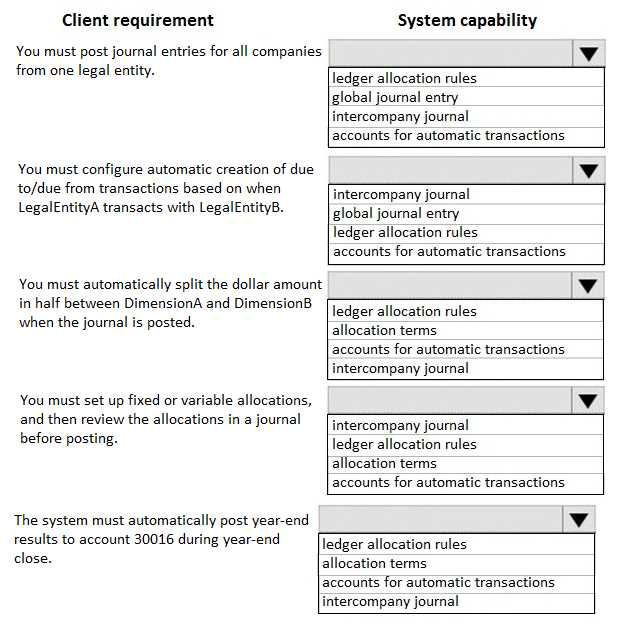
B handles intercompany transactions, so that covers the due to/due from part.
I’d say B is definitely for the automatic due to/due from transactions since that’s intercompany posting. For the half split between dimensions, C looks like the right setup for allocation rules.
You need to create Trey Research s bank accounts.
Which three actions should you perform in sequence? To answer move the appropriate actions from
the list of actions to the answer area and arrange them in the correct order.
NOTE: More than one order of answer choices is correct. You will receive credit for any of the correct
orders you select.
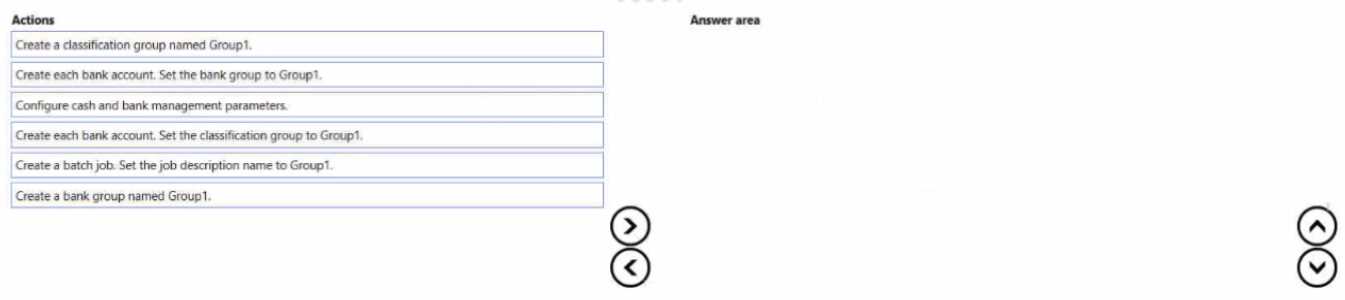
Starting with setting up the legal entity (B) is key, since without it, the bank account can't exist. After that, creating the bank account (D) comes next, and finally assigning user permissions (A) makes sense to control access.
B first to establish entity, then D for account, A last for permissions.
You need to configure the Dynamics 365 for Finance and Operations General ledger module. Which
three configurations must you use? Each correct answer presents part of the solution. NOTE: Each
correct selection is worth one point.
Probably A, B, and E since you need to prep the new year and close parameters.
Maybe A, B, and E—closing needs the calendar and next year set, transfer balance isn’t crucial here.
accounts, The company wants to import their bank statements.
You need to import electronic bank statements to reconcile the bank accounts.
Which three actions can you perform? Each correct answer presents a complete solution.
NOTE: Each correct selection is worth one point.
I’m with the idea that B is just a setup step, not an import action. A sounds off because selecting all accounts and uploading all files at once isn’t typical. D is pretty clearly an import option on the Bank Statements page, so that’s a solid pick. C and E both mention importing statements, with E specifically allowing for multiple accounts and legal entities, which fits the “multiple bank accounts” part. So I’d say C, D, and E make the most sense here based on what actual import actions are described.
A imo doesn’t sound right since you can’t bulk upload files for all accounts at once like that. B is just setup, so I’d rule out A and B. C, D, and E cover import options more realistically.
What should you use?
This one feels like A to me. Item model groups aren’t just about grouping items but also define how those items behave in the system, which sounds crucial for specialized reporting like pickle types. The other options seem more about broader categories or financial tracking, not the specific control needed here.
B/D? I’m thinking B because item groups are all about grouping products with shared features, which sounds like a good fit for pickle types as they’re basically product categories. D could also be an angle if the reporting ties into financial aspects, like tracking costs or revenue by pickle type, but it feels less directly related to the item classification itself. A feels more about item behavior rules than classification, so maybe less relevant here.
Option A could work if exceeding budget is allowed for User4’s purchase.
D seems right since control at department level could bypass main account limits.
You need to configure the system to for existing purchasing contracts.
Which commitment types should you use? To answer, drag the appropriate commitment types to the
correct requirements. Each commitment type may be used once, more than once, or not at all. You
may need to drag the split bar between panes or scroll to view content.
NOTE: Each correct selection is worth one point.
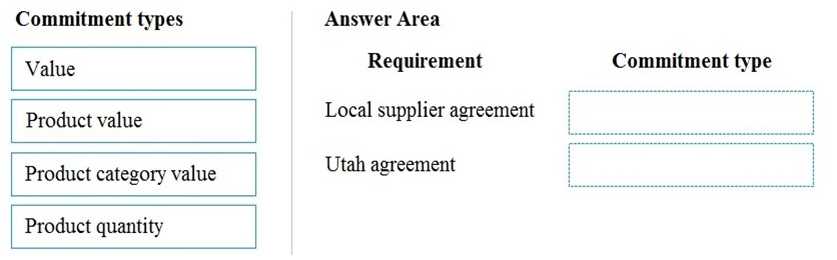
If some contracts are just forecasts, Forecast Commitment fits those, while firm agreements need Purchase Commitment since they represent actual obligations. Using the type based on contract certainty seems right.
I agree with using Purchase Commitment for firm contracts because it directly reflects enforceable purchase agreements. For the more flexible or estimated contracts, Forecast Commitment seems logical since it’s about planned quantities without binding.
You need to configure currencies for the legal entities.
configure currencies? To answer, select the appropriate options in the answer area.
NOTE: Each correct selection is worth one point.
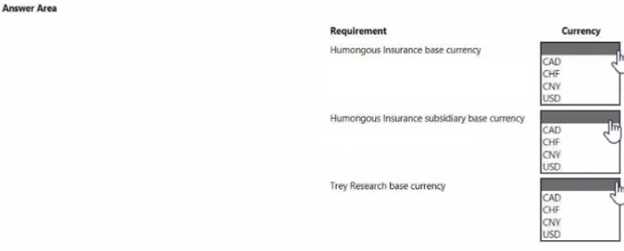
A for functional currency, others set elsewhere in reporting or transactions setup.
Functional currency (A) is mandatory per legal entity, the others aren’t set here.
posting group field should you use?
C/D? Use tax usually for purchases, sales tax for sales, depends on context.
C/D? I’d go with C since use tax payable is specifically for taxes the company owes on purchases where sales tax wasn’t collected, which fits a subsidiary handling its own tax liabilities. D could also work if we’re focusing on the sales side, but the question seems to lean toward purchase-related tax postings. A and E don’t seem relevant here since they deal with receivables and discounts, which aren’t typical for posting groups in this scenario. B is more about the expense side rather than the payable, so C feels like a cleaner fit.
and data reside in Finance and Operations,
The client currently uses a separate reporting tool to perform their financial consolidation and
eliminations. They want to use Finance and Operations instead.
You need to configure the system and correctly perform eliminations.
Solution: Select Consolidate online in Finance and Operations. Include eliminations during the
process or as a proposal. Setup the transactions to post in the legal entity configured for
consolidations.
Does the solution meet the goal?
Maybe B, because just selecting Consolidate online and including eliminations isn’t enough. You need to set up elimination rules and intercompany postings properly first for the process to work right.
B imo, missing key steps like elimination rules setup and proper intercompany configuration.
What should you select?
Not B, conditional tax doesn’t fix posting account errors.
It’s C. If the problem is about posting errors, setting the settlement account main account usually fixes missing account setups that block transactions. That’s more likely than ticking tax checkboxes here.
Why are some transactions being excluded?
D imo, if the report setup intentionally filters out CustomerZ transactions, that would explain exclusions without the company confusion. It’s worth checking the filter criteria before blaming the company choice.
It’s A. If User7’s used to working in CompanyB but accidentally runs the report in CompanyA, it would explain missing transactions. It’s easy to overlook the company filter, and that alone would exclude anything not tied to CompanyA. This fits the issue better than assuming the report is excluding specific customers, especially if the user expects all transactions to show regardless.
You need to select the functionality to meet the requirement.
Which features should you use? To answer, drag the appropriate features to the correct
requirements. Each feature may be used once or not at all. You may need to drag the split bar
between panes or scroll to view content.
NOTE: Each correct selection is worth one point.
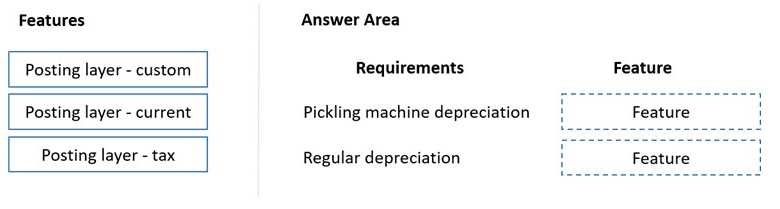
I think C suits automation best since it handles simple repetitive tasks, while B's conditional logic fits workflows. A probably aligns with data management given its focus on data handling features.
B works best for workflows because of its conditional flexibility.
You need to determine the root cause for User1’s issue.
Which configuration options should you check? To answer, select the appropriate options in the
answer area.
NOTE: Each correct selection is worth one point.
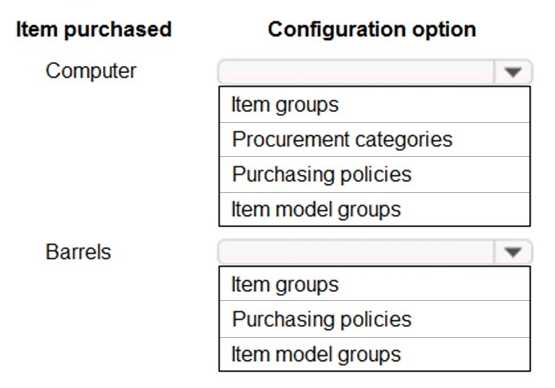
B for sign-in logs confirms if User1 actually attempted access.
I’d add that C could be worth checking if the problem involves multi-factor authentication hiccups—sometimes MFA settings trip people up even if sign-in logs look okay. Also, D is important because user permissions or role assignments often cause access issues. So, B definitely for the logs, and then D for the user’s access rights. A might be less urgent unless there’s a mention of device compliance policies specifically blocking User1.