Free Microsoft AZ-305 Actual Exam Questions - Question 14 Discussion
HOTSPOT You plan to deploy Azure Databricks to support a machine learning application. Data engineers will mount an Azure Data Lake Storage account to the Databricks file system. Permissions to folders are granted directly to the data engineers. You need to recommend a design for the planned Databrick deployment. The solution must meet the following requirements: Ensure that the data engineers can only access folders to which they have permissions. Minimize development effort. Minimize costs. What should you include in the recommendation? To answer, select the appropriate options in the answer area. NOTE: Each correct selection is worth one point. 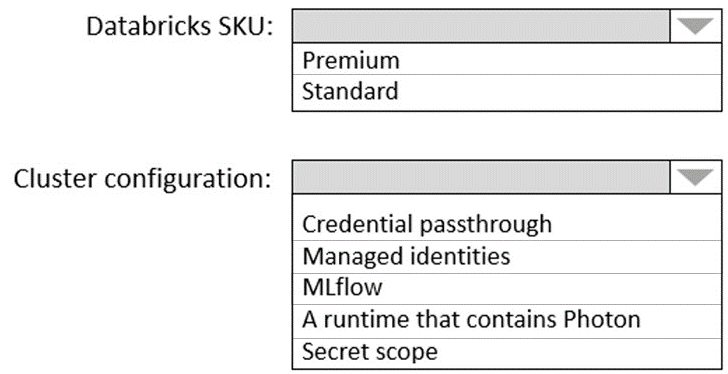
I think choosing Azure Data Lake Storage Gen2 ACLs is key since it handles folder-level permissions natively. Also, mounting the ADLS Gen2 storage directly in Databricks keeps costs and dev work low compared to custom access controls.
Using ACLs on ADLS Gen2 folders is smart here since it directly controls access without extra coding. Also, mounting the storage in Databricks as DBFS doesn’t add cost or complexity, so that fits the requirements well.
I’d go with using Azure Data Lake Storage Gen2 ACLs for controlling folder permissions since it’s designed for fine-grained access and fits well with Databricks mounts. Setting up ADLS Gen2 ACLs means data engineers only get access to folders they have permissions for, which hits the security requirement directly. Also, it’s less work than implementing complex RBAC or custom scripts, so it keeps development effort and cost low. I’d skip options that suggest broad permissions or complicate the environment because that wouldn’t meet the minimize effort or cost part.
This question feels a bit open-ended with the hotspot format since we can pick multiple options. The key points seem to be controlling access at folder level for data engineers but without making development or cost too high. I guess using Azure Data Lake Storage Gen2 with ACLs for folder permissions makes sense, since it offers fine-grained access control. Also, mounting storage directly to Databricks is a common pattern that keeps things simple. I'm not totally sure about the networking option here - whether to use public endpoints or private link might depend on security requirements, but i