Free Microsoft Azure AZ-104 Actual Exam Questions - Question 11 Discussion
DRAG DROP - You onboard 10 Azure virtual machines to Azure Automation State Configuration. You need to use Azure Automation State Configuration to manage the ongoing consistency of the virtual machine configurations. Which three actions should you perform in sequence? To answer, move the appropriate actions from the list of actions to the answer area and arrange them in the correct order. NOTE: More than one order of answer choices is correct. You will receive credit for any of the correct orders you select. Select and Place: 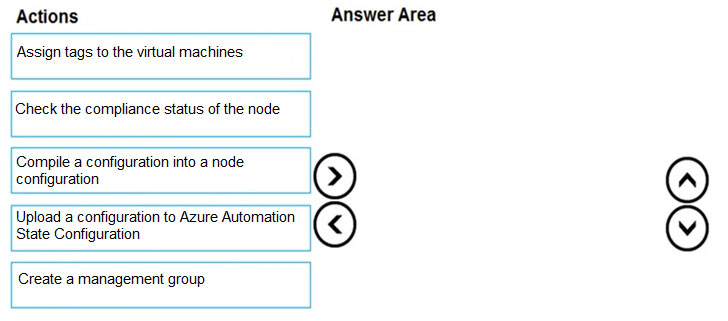
You can also think of it like preparing a recipe (import/create), cooking it up (compile), then serving it to the guests (assign). Skipping compile means the VMs won’t have a usable configuration.
Assigning the configuration comes last after compiling and importing.
I'd say start with importing or creating the configuration, then compile it so it’s ready, and lastly assign it to the VMs. The sequence matters because the config must be compiled before applying.
Another way to look at it: start by creating or importing the configuration because you need something to apply. Then compile it, which basically prepares the config for the VMs to use. Finally, assign it to the VM nodes so they start enforcing the config. Skipping any of these steps messes up the process. It's like writing a recipe, printing it out, then handing it to the chefs. The order just has to flow logically from creation to enforcement.
You gotta import or create the config first, then compile it so the nodes can use it, and finally assign it to the VMs. Skipping compilation breaks the enforcement step.
I think the critical part here is ensuring the configuration is compiled before assigning it to the VMs. Without compiling, the target nodes won’t understand the config. So step one should be importing or authoring the configuration, then compiling it into a MOF document, and finally assigning that compiled config to the VMs. The extension installation on VMs typically happens automatically after assignment, so it’s not a separate manual step in this flow. This sequence ensures Azure Automation State Configuration manages consistency properly.
Import or author config first, then compile, and lastly assign to VMs.
Agree with starting by importing or creating the DSC config, then compiling it since VMs need a compiled config, and finally assign it to the VMs so they get the policy applied. The sequence is key here.
Importing or authoring the configuration definitely needs to come before compiling it. You can’t compile something that doesn’t exist yet. Assigning the configuration to the VMs has to be last since they need the compiled config first.
I'd start by importing or authoring the configuration in Azure Automation, then compile it, and finally assign the compiled configuration to the VMs as DSC nodes. That sequence makes sense to me.
Not sure about the sequence here, maybe start with assigning DSC node configuration?