Free COMPTIA Cloud+ CV0-004 Actual Exam Questions
Dumps Box (DumpsBox) offers up-to-date practice exam questions for CV0-004 certification exam which are developed and validated by CompTIA subject domain experts certified in COMPTIA Cloud+ CV0-004 . These practice questions are update regularly as we keep an eye on any recent changes in CV0-004 syllabus, and when there is update our team quickly adjusts the questions. This commitment to providing the best quality exam prep material to certification aspirants is what makes DumpsBox.com the best certification exam prep website. On top of that, our strong, yet strictly moderated, community based feedback keeps the content clean and current. Each question has helpful community discussion that provides it extra perspective and introduces helpful resources for better exam preparation. This also saves students from other outdated practice questions or illicit exam dumps that can have adverse affects on career. Browse through our COMPTIA Cloud+ CV0-004 exam questions and pass your exam on first try.
data from the cloud?
B. The question focuses on accessing data, so having the cloud content read aloud makes the most direct impact for someone visually impaired. OCR (A) might help if the data is all images, but since it just converts stuff into text, it’s not really an assistive tech by itself. Text-to-voice actually delivers the info in an accessible way, which is the main goal here. Also, since cloud data often comes in text form already, going straight to text-to-voice makes more sense for practical everyday use.
B, because hearing the data is the key benefit for visually impaired users.
which is normally hosted on a local VM cluster, for usage with an external user population?
Thinking about external users, moving from on-premises to cloud (C) seems logical since cloud scales better for public access compared to on-prem. But D could be tricky if user access isn’t straightforward.
C, cloud offers better external user access for on-prem apps.
repositories?
Maybe A makes the most sense since it highlights the core difference: public repos are open access, while private ones need credentials. The other options seem more about features or policies that aren’t universal.
It’s A. Public repos let anyone pull images without signing in, while private ones always need some kind of permission. B is less clear since browsing features can vary a lot depending on the service.
constraints, the application cannot be changed prior to migration. Which of the
following migration strategies is best approach for this use case?
It’s D because rehosting doesn’t touch the app, perfect for tight deadlines.
This one definitely feels like D again. Rehosting is basically moving the whole thing as-is to the cloud, so no need to mess with the app before migration. Since the question says no changes can be made upfront, that rules out B and C for sure. A doesn’t fit because you’re not retiring, just migrating. So D is the simplest and fastest approach here.
method to access the company's cloud environment. When a cloud
administrator attempts to create the additional instances in the new locations, the operation is
successful in some locations but fails in others. Which of the following is the
most likely reason for this failure?
C/B? Could be hitting service quotas in certain locations since those limits can vary by region, but the availability of services (B) is also a strong contender if some regions don’t support these VDIs yet.
C/D? While regional availability (B) makes sense, I’m thinking quotas (C) could be the culprit if the company hit limits in some specific locations but not others. Deprecation (D) feels less likely since it wouldn’t usually cause random regional failures, more like a global issue. Partial outages (A) seem temporary and less selective by region too. So, I’d check the quotas next just to be sure.
decentralized, and decoupled?
D, since microservices naturally break down apps into smaller, independent parts.
It’s D because microservices let teams work independently on different components, unlike hybrid cloud which is just about where stuff runs, not how it’s architected.
only by a corporate VPN and not by direct public internet access. Which of the
following would achieve this objective?
B imo, since ACLs can enforce strict IP-based rules, blocking any requests not coming from the corporate VPN’s IP range. While a VPC defines the network boundary, it doesn’t automatically restrict access without specific configurations. ACLs give that granular control to deny direct public internet traffic effectively. WAF and SSH don’t really fit here since WAF is more about web app protection and SSH is just a protocol, not a network access control mechanism.
It’s B because ACLs can explicitly block traffic from outside the VPN IP range, which directly prevents public internet access regardless of VPC setup. That’s more precise than just relying on a VPC alone.
purposes. Which of the following is the most important change the administrator
should make to satisfy these requirements?
It’s C, because without proper retention, backups might get deleted too soon.
A imo, the location of backups matters a lot for long-term reporting, especially if regulations require storing data in specific geographic or secure sites. Even if retention is set, if backups aren’t stored properly, it might not meet compliance. Changing retention without considering where backups are kept could be pointless in some cases.
The CMS service is frequently targeted by a malicious threat actor using DDoS.
Which of the following should a cloud engineer monitor to identify attacks?
Probably A. Network flow logs directly show traffic volume and sources, so they’re the best way to spot DDoS activity compared to other logs that don’t focus on network patterns as clearly.
It’s C because cloud provider event logs often include security alerts and infrastructure-level events that can hint at unusual traffic patterns or resource exhaustion from DDoS. They provide a broader perspective than just instance-level logs and can also show automated mitigation actions or scaling events triggered by the attack. While network flow logs (A) are good for detailed traffic data, the cloud provider logs give context on what’s happening across the entire service stack, which is vital for spotting and responding to DDoS threats early.
Which of the following technologies is the best fit for this integration?
Probably C here too. Most payment processors expose REST APIs since they’re easier to use and widely supported. A (RPC over SSL) feels outdated and less common for this kind of integration, plus it’s not as straightforward as REST. D (secure websockets) is more for persistent connections, like real-time updates, not typical for payment processing. B is definitely out since SQL doesn’t handle external service communication. So C makes the most sense for securely exchanging payment info between systems.
I’m also crossing off B since SQL transactions deal with database consistency rather than connecting to outside services. D, secure web sockets, are more for real-time communication but not typically used for payment processing integration. A, RPC over SSL, might handle secure calls but is less common and might be harder to maintain or scale compared to REST APIs. So C seems like the straightforward choice, as it’s designed for stateless communication and widely adopted in payment integrations. Does anyone think RPC could still have an edge here in specific scenarios?
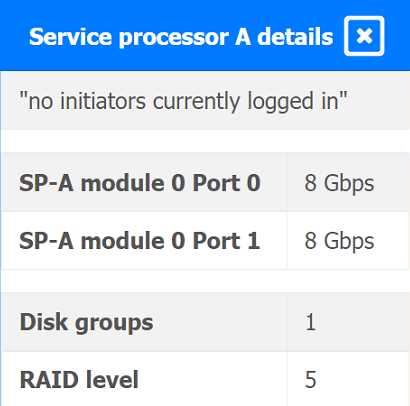
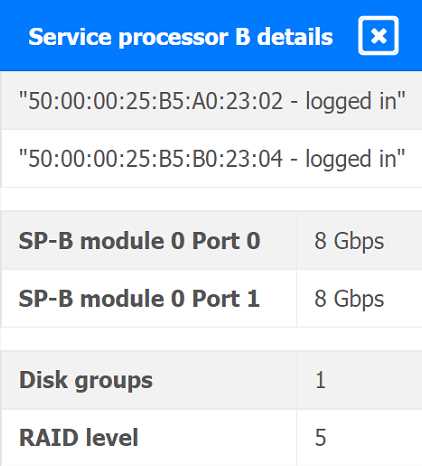
You are a cloud engineer working for a cloud service provider that is responsible for an IaaS offering. Your customer, who creates VMs and manages virtual storage, has noticed I/O bandwidth issues and low IOPS (under 9000). Your manager wants you to verify the proper storage configuration as dictated by your service level agreement (SLA). The SLA specifies: . Each SFP on the hypervisor host must be set to the maximum link speed allowed by the SAN array. . All SAN array disk groups must be configured in a RAID 5. . The SAN array must be fully configured for redundant fabric paths. . IOPS should not fall below 14000 INSTRUCTIONS Click on each service processor to review the displayed information. Then click on the drop-down menus to change the settings of each device as necessary to conform to the SLA requirements. 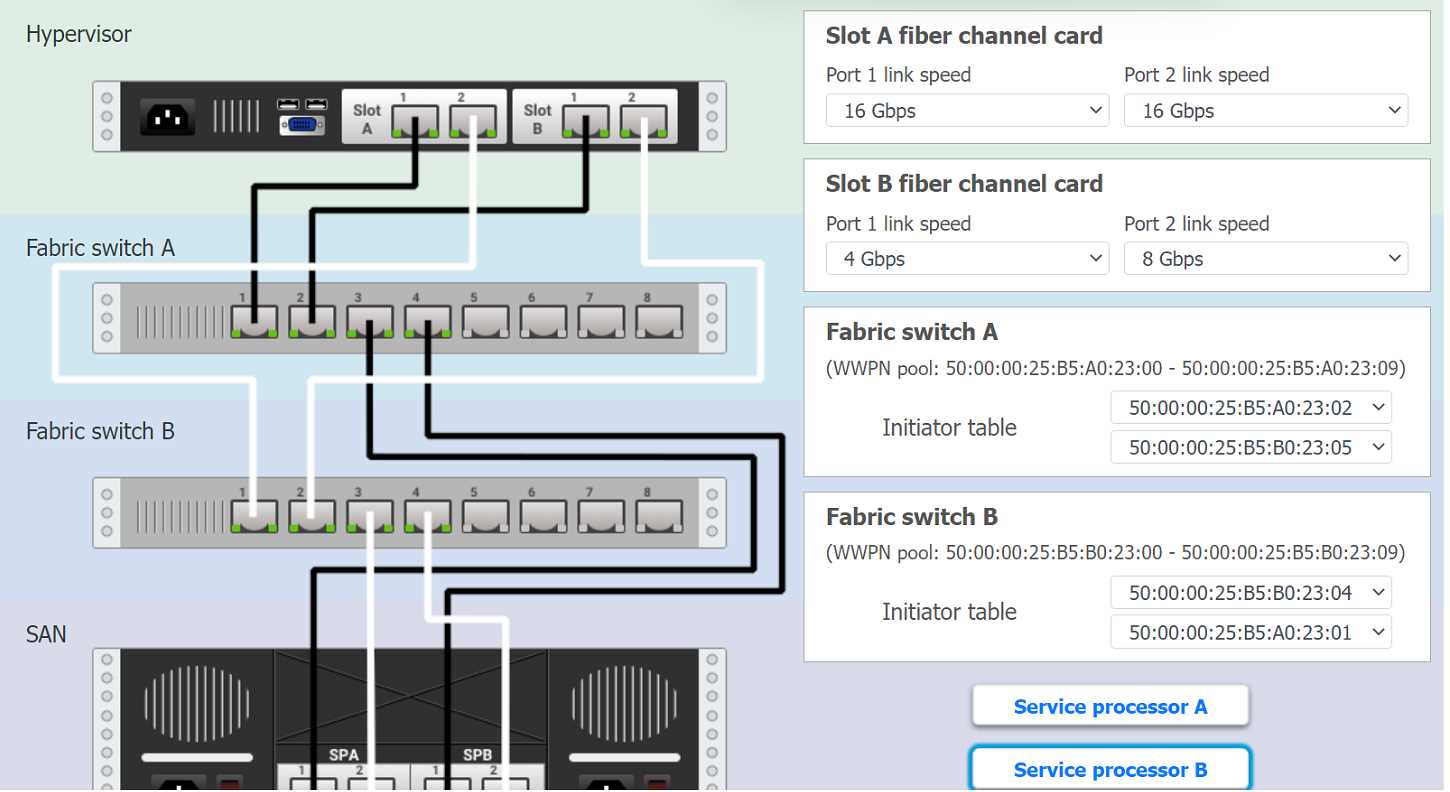
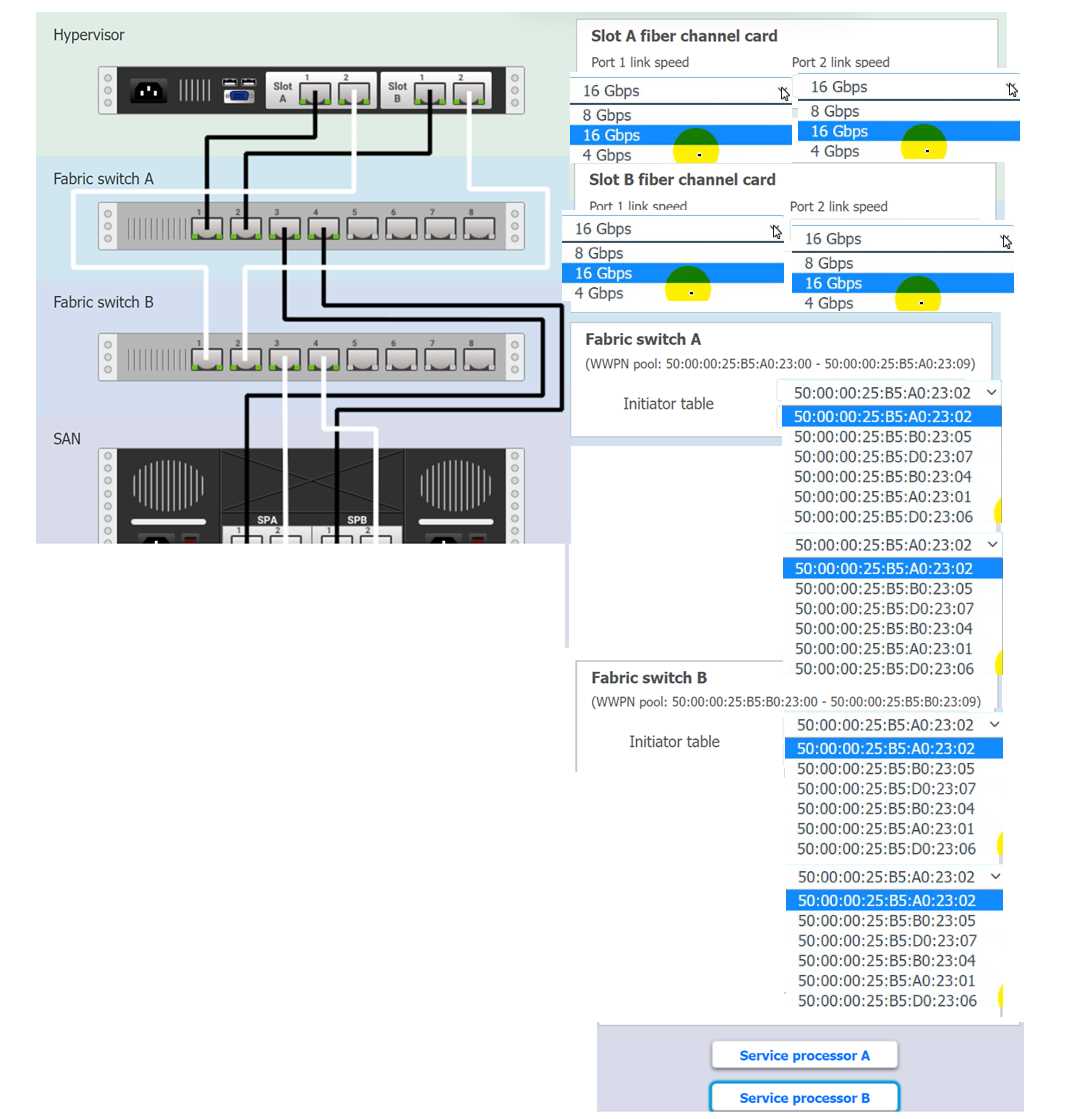
Option D also matches the max link speed and RAID 5 requirement, plus redundant paths. It might be a better fit since it doesn’t ignore the RAID 5 rule like C does, even if IOPS are a bit lower.
I think option C is best because it hits the max link speed and has redundant fabric paths, which the SLA demands. RAID 5 in B would definitely drag down the IOPS below the 14,000 target.
HOTSPOT A highly regulated business is required to work remotely, and the risk tolerance is very low. You are tasked with providing an identity solution to the company cloud that includes the following: secure connectivity that minimizes user login tracks user activity and monitors for anomalous activity requires secondary authentication INSTRUCTIONS Select controls and servers for the proper control points. 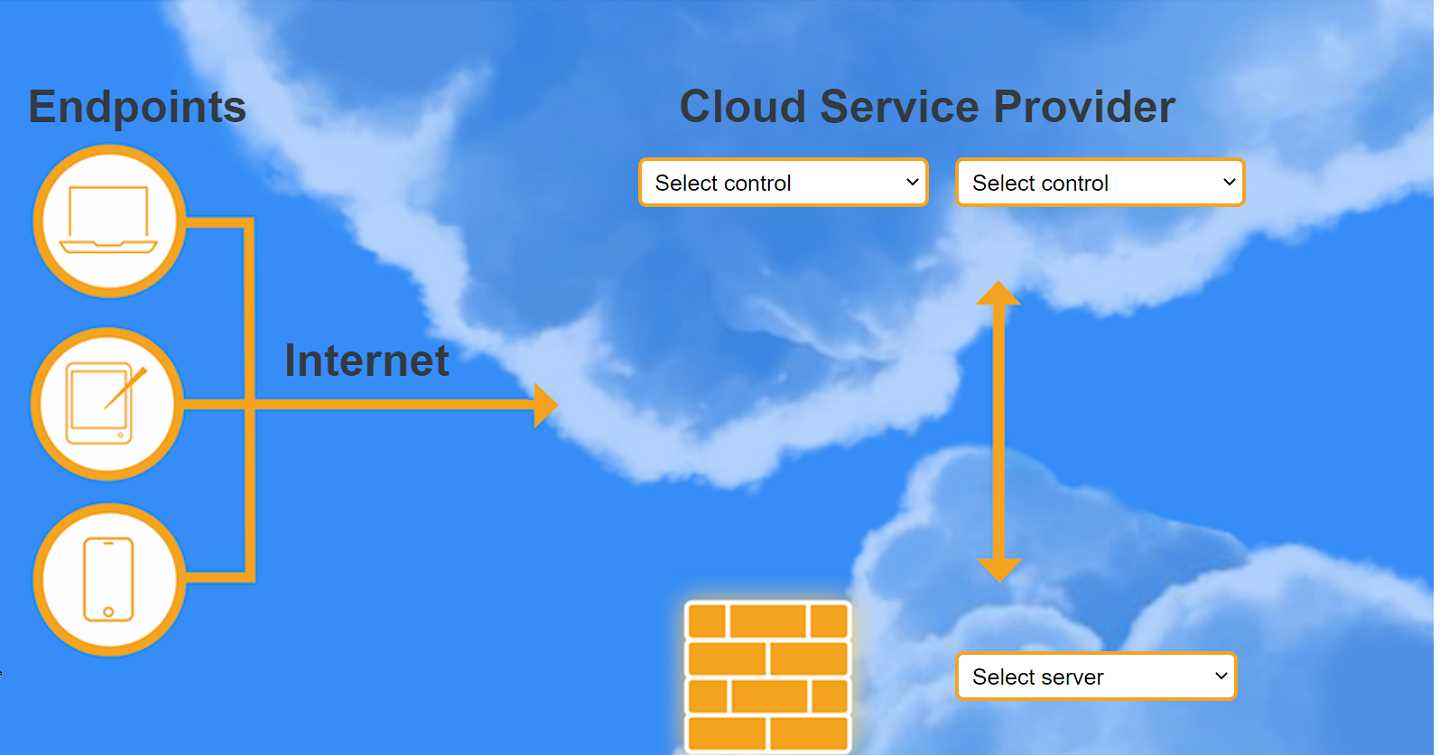
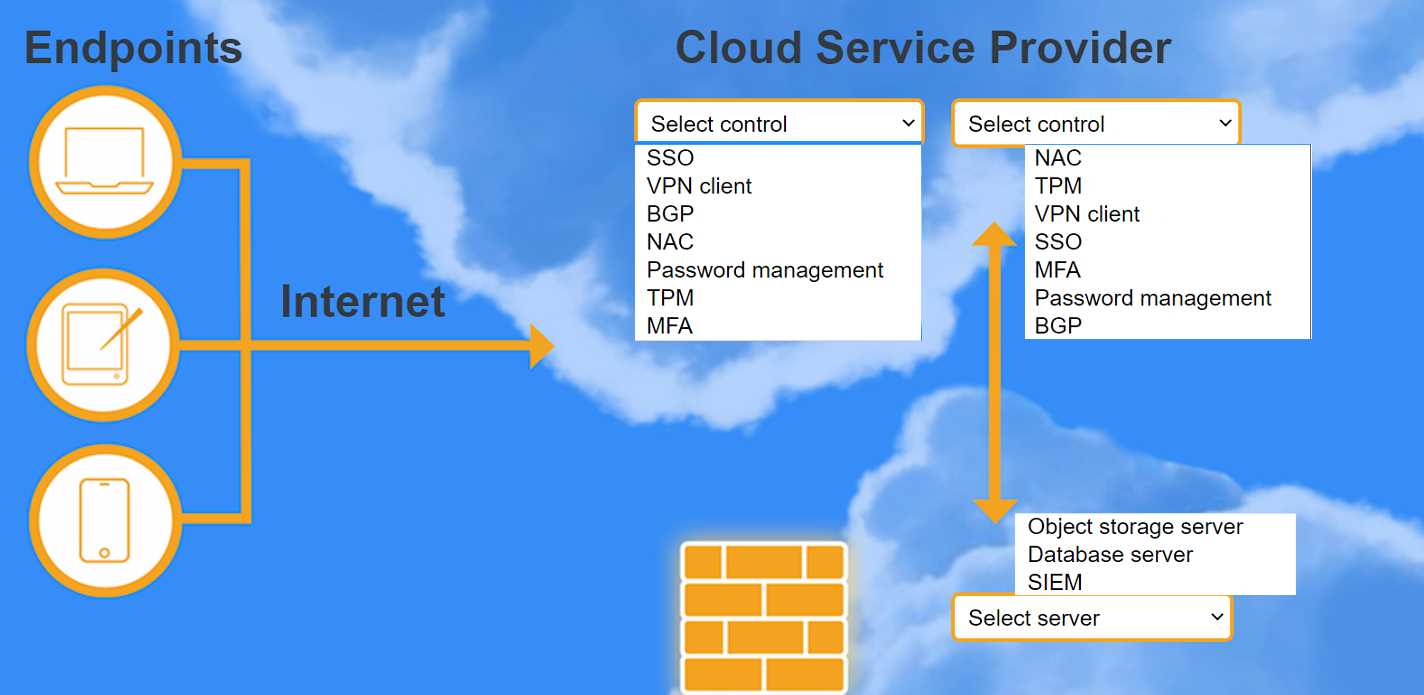
B works because it includes strict access control plus consistent monitoring.
I’d rule out anything that doesn’t clearly support continuous monitoring since low risk tolerance means they can’t miss anomalies. So options without integrated anomaly detection or logging should be off the table.
HOTSPOT An e-commerce company is migrating from an on-premises private cloud environment to a public cloud IaaS environment. You are tasked with right-sizing the environment to save costs after the migration. The company's requirements are to provide a 20% overhead above the average resource consumption, rounded up. INSTRUCTIONS Review the specifications and graphs showing resource usage for the web and database servers. Determine the average resource usage and select the correct specifications from the available drop- down options. 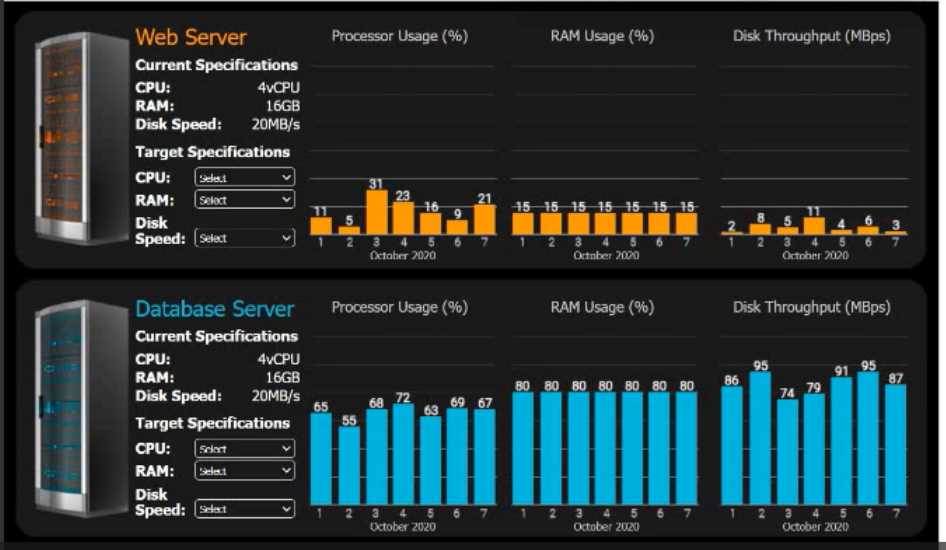
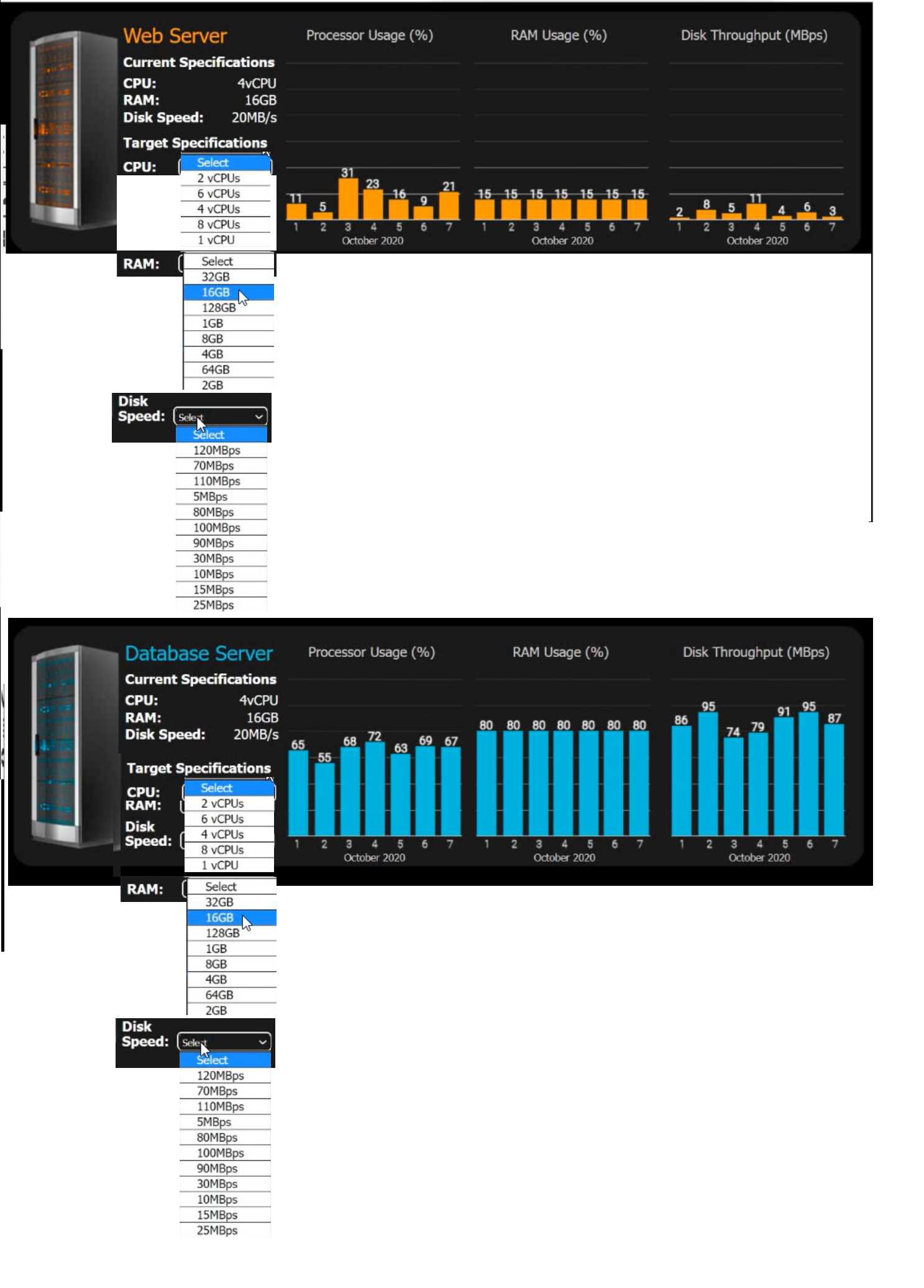
For the web server CPU, average at 75% plus 20% overhead rounds nicely to 90%, so C.
Looking at the web server’s CPU usage, the average seems close to 75%, so with 20% overhead it hits around 90%, which matches option C’s 90%. For memory, the average looks near 4GB, so adding 20% brings it just over 4.8GB, rounding up to 5GB fits option B. For the DB server, I don’t think the overhead applies only to memory; CPU usage should get the same treatment. The average CPU usage hovers around 55%, and adding 20% overhead gets about 66%, which matches option B’s 65%. For memory, the average looks about 16GB, so option B’s 20GB is the best fit.
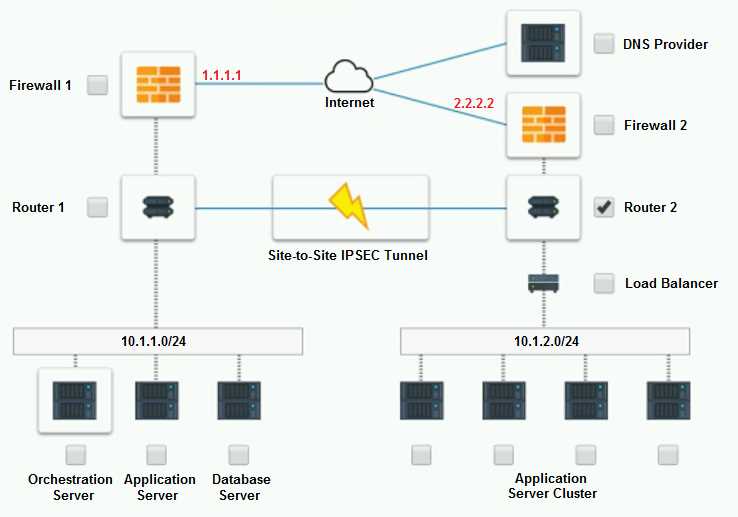
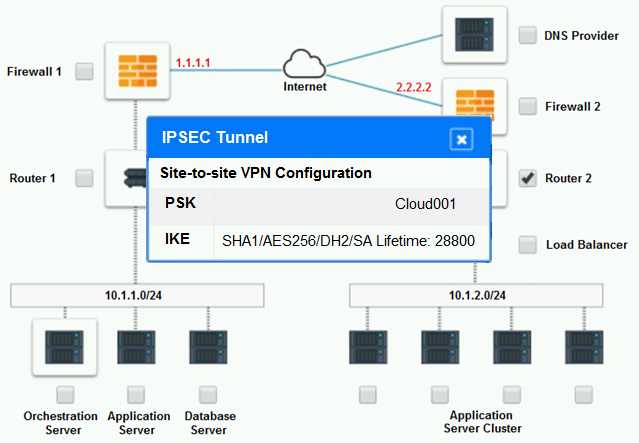
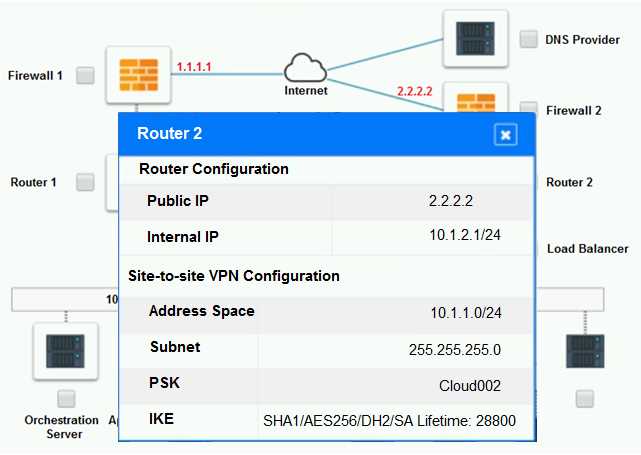
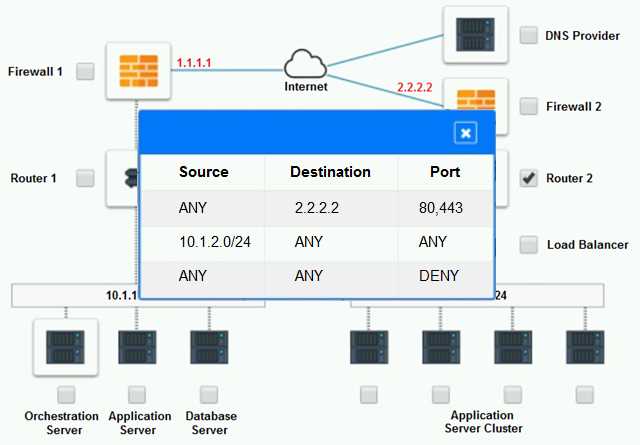
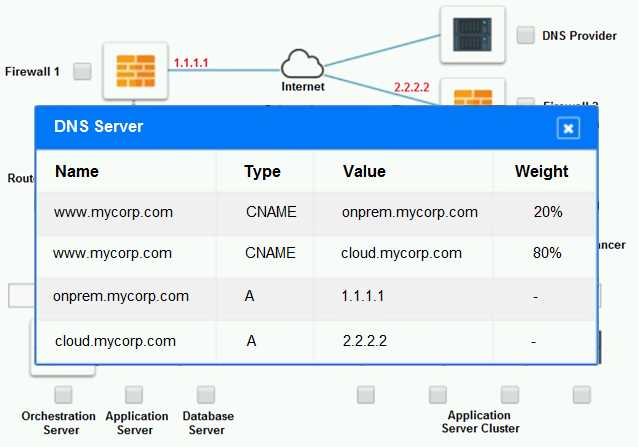
A company has decided to scale its e-commerce application from its corporate datacenter to a commercial cloud provider to meet an anticipated increase in demand during an upcoming holiday. The majority of the application load takes place on the application server under normal conditions. For this reason, the company decides to deploy additional application servers into a commercial cloud provider using the on-premises orchestration engine that installs and configures common software and network configurations. The remote computing environment is connected to the on-premises datacenter via a site-to-site IPSec tunnel. The external DNS provider has been configured to use weighted round-robin routing to load balance connections from the Internet.
During testing, the company discovers that only 20% of connections completed successfully.
INSTRUCTIONS
Review the network architecture and supporting documents and fulfill these requirements:
Part 1:
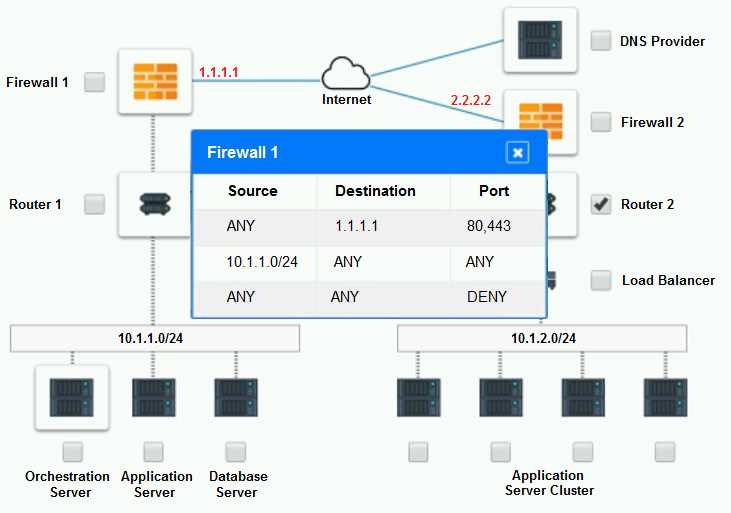
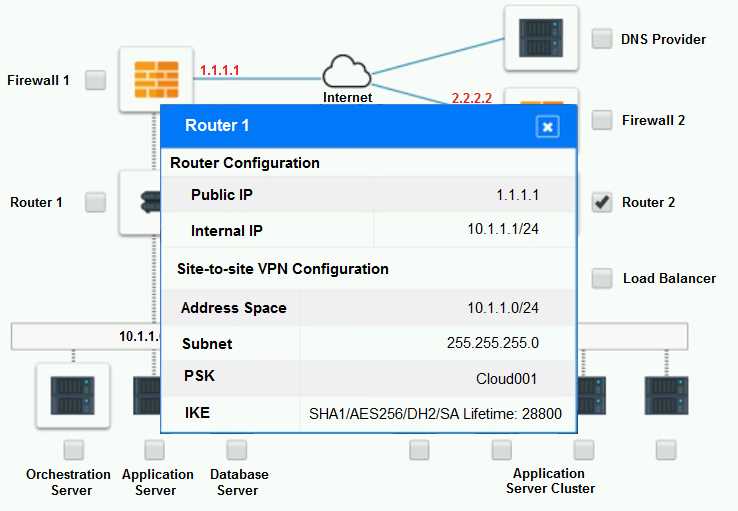
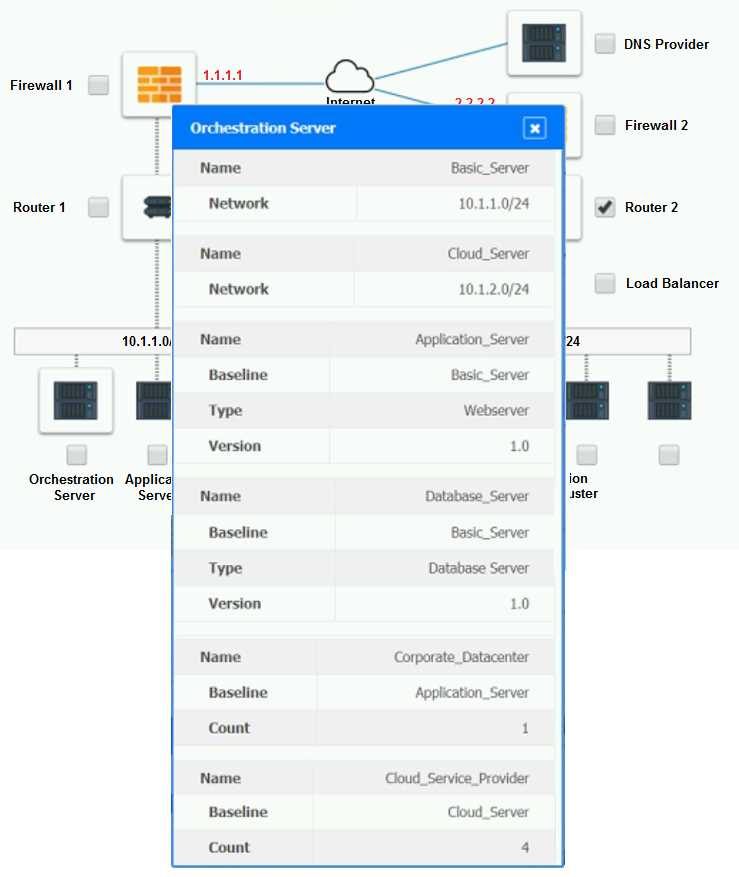
Analyze the configuration of the following components: DNS, Firewall 1, Firewall 2, Router 1, Router
2, VPN and Orchestrator Server.
Identify the problematic device(s).
Part 2:
Identify the correct options to provide adequate configuration for hybrid cloud architecture.
If at any time you would like to bring back the initial state of the simulation, please click the Reset All
button.
Part 1:
Cloud Hybrid Network Diagram
Part 2:
Only select a maximum of TWO options from the multiple choice question
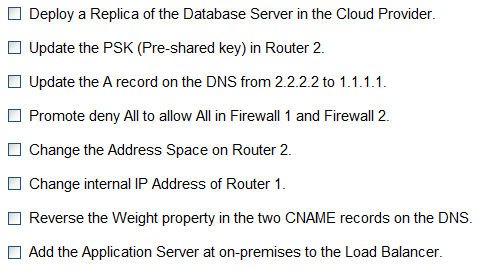
Firewall 2 looks suspicious since it might not allow return traffic from the cloud servers. Also, Router 2 probably needs updated routes for the new app servers; static routes could be causing dropped packets.
Are we sure both firewalls are correctly allowing traffic from the cloud app servers back through the VPN? Seems like a common spot to block return traffic. Also, does the VPN tunnel support bi-directional routing properly? The weighted round-robin DNS should distribute requests evenly but if only 20% succeed, maybe routing or firewall rules on either side are preventing some connections. Do we have logs showing where packets get dropped? That’d help narrow it down before picking options.
A company hosts various containerized applications for business uses. A client reports that one of its routine business applications fails to load the web-based login prompt hosted in the company cloud. Click on each device and resource. Review the configurations, logs, and characteristics of each node in the architecture to diagnose the issue. Then, make the necessary changes to the WAF configuration to remediate the issue. 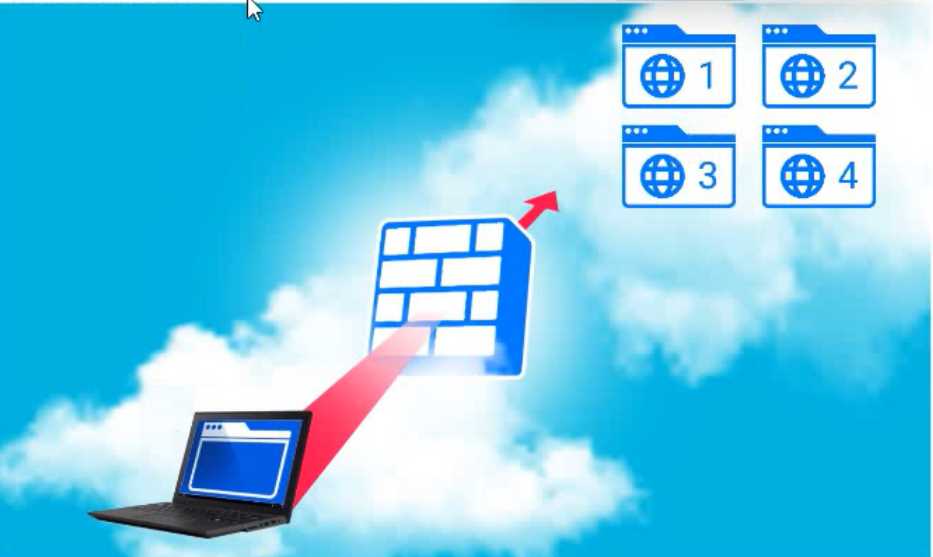
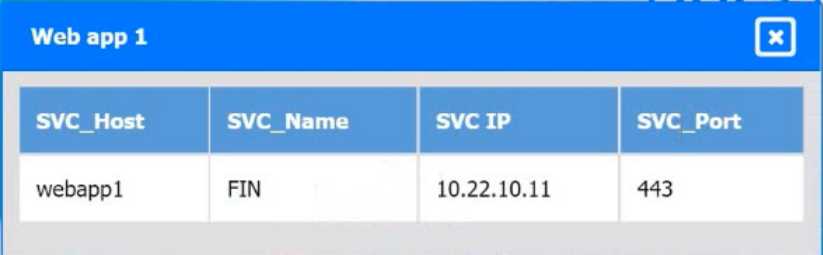
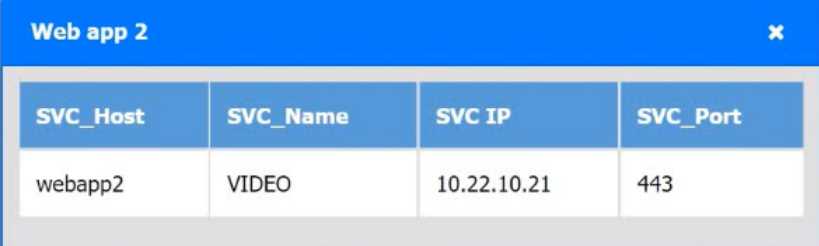
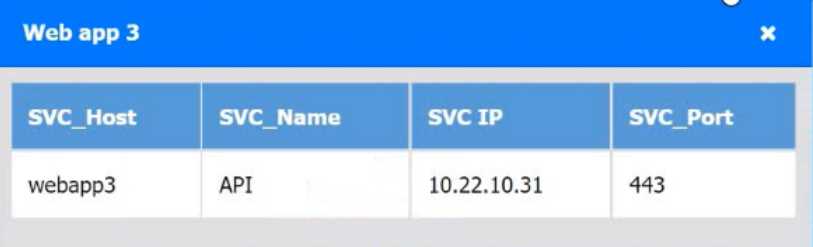
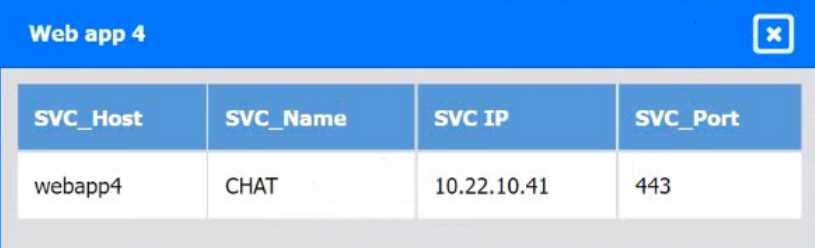
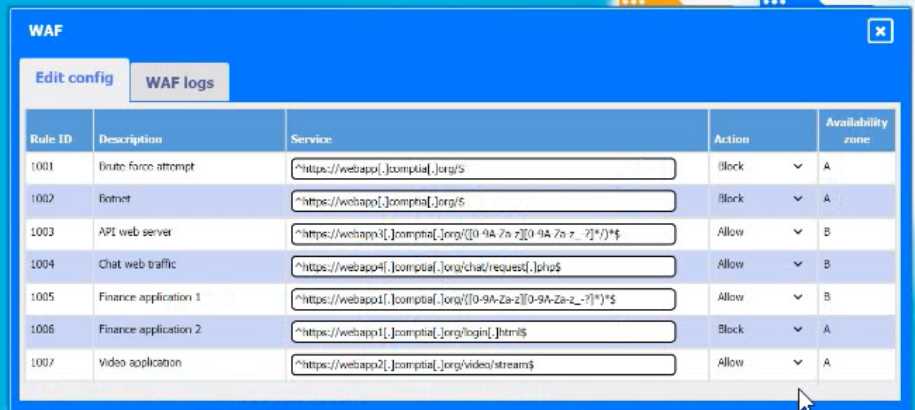
I think option C makes the most sense. The WAF is likely blocking legitimate login traffic due to strict rules, so updating the WAF to allow that traffic would fix the problem.
I noticed in the WAF logs that there’s a lot of blocked traffic related to SQL injection rules. Since login forms often include input fields that might trigger false positives, disabling or tweaking those specific SQLi rules like in option C makes sense. Also, the app servers and network devices seem fine, so it points more toward WAF filtering. Removing or modifying those strict rules for the login endpoint should get the prompt loading again without compromising overall security.