Free Cisco 350-801 Actual Exam Questions - Question 1 Discussion
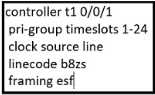
Refer to the exhibit. An administrator must replace the T1 card with an E1 card. What is the correct
configuration if the administrator was asked to configure 12 time slots?
C/D? The question’s about configuring 12 time slots on an E1 card replacing a T1. E1 has 32 time slots, but only 30 are for voice, so the config must reflect that difference. Options showing configs with the right timeslots allocated (like 12 out of 30) make more sense. A and B might be T1-focused or use wrong slot counts. D looks like it matches E1 and the needed 12 channels better, but C could be close if it shows correct timeslot usage. Gotta pick the one that correctly maps the 12 timeslots on an E1 interface.
It’s B for me. Translation patterns do more than just match numbers; once matched, they send the call to a specific destination, which is their main job. C talks about CDR updates, but that’s more of a side effect rather than a defining characteristic. A is off because translation patterns primarily work with the called number, not the calling party number. D is definitely wrong since translation patterns usually require partitions to control access. So, B fits best as it highlights the key behavior after matching a translation pattern.
B/C? B fits because translation patterns do route calls after a match, but C is true too since the dialed number manipulation usually shows up in CDRs for audits. D just seems wrong, partitions are usually needed.
C imo, since dialed number changes in translation patterns usually get logged in the CDR, which helps with tracking and troubleshooting calls. B is right about routing but doesn’t cover this detail.
B tbh makes the most sense because translation patterns are mainly about redirecting calls once a number matches. A doesn’t fit since calling party number isn’t the main trigger here. C sounds off because dialed number manipulation doesn’t usually mess with call detail records directly. And D is wrong since partitions are important for controlling access to translation patterns. So B really nails what translation patterns do in UCM.
Makes sense to me, it’s option B.