Free Cisco 350-601 Actual Exam Questions - Question 5 Discussion
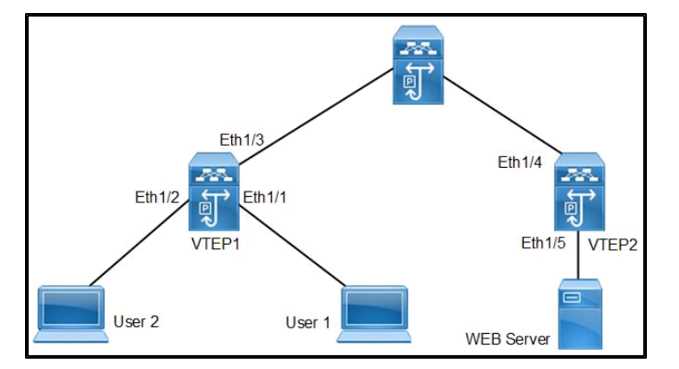
Refer to the exhibit. User1 and User2 are connected to VTEP1 switch. The users can reach the WEB server. The
P-10
monitoring tool shows degrading network performance and excessive traffic is sent from User2 to reach the WEB
server. Which storm control percentage levels must be used to suppress traffic from User2 and allow all traffic types
from User1?
Maybe C, because setting 0 on Eth1/2 could block User2’s excess traffic.
C/D? If Eth1/2 is User2’s port, setting 0 there blocks their excess traffic, while 100 on Eth1/1 leaves User1 unaffected. Without clear port mapping, this seems the best guess.
D imo, setting storm control to 100 on both Eth1/1 and Eth1/5 means no suppression on those ports, so traffic from User1 isn’t affected. The key is applying strict control only on User2’s port, which isn’t in the options except for that one. Since User2 is causing the issue, we want a low or zero storm control level on their interface to block excessive traffic but keep User1 unaffected. So, D seems safer to avoid impacting User1 while not restricting other possibly critical links.
I’m thinking about this differently. If User2 is causing the storm, we want to apply a strict storm control on their port only. So whichever interface corresponds to User2 should have the lowest level, like 0, to suppress the traffic. The other user’s port must have a high level so that their traffic isn’t affected. Since Eth1/2 likely relates to User2 here, setting storm control level 0 there and 100 on Eth1/1 seems to fit the requirements best. Does anyone think the ports might be swapped, though? The exhibit isn’t super clear on port-user mapping.
Option C looks right to me too. Setting 0 on Eth1/2 basically stops User2's flood, while 100 on Eth1/1 keeps User1’s traffic untouched. That matches the goal perfectly.
C makes sense because setting level 0 on Eth1/2 basically blocks User2’s excessive traffic, while level 100 on Eth1/1 lets User1’s traffic flow freely without restriction.
C/D for sure, but I’m guessing C since it stops traffic on Eth1/2 (User2) and allows it on Eth1/1 (User1).