Free Cisco SWSA 300-725 Actual Exam Questions - Question 7 Discussion
DRAG DROP Drag and drop the Cisco WSA methods from the left onto the correct deployment modes on the right. 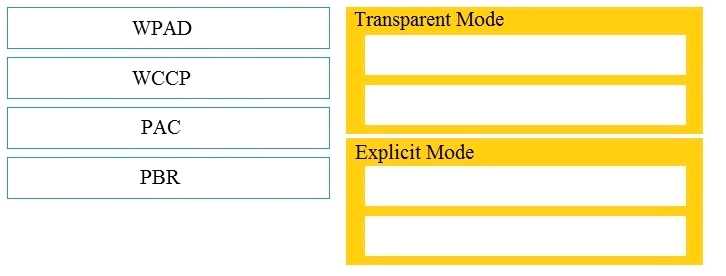
WCCP usually runs inline, so that’s my pick for the inline deployment mode.
I agree on putting explicit proxy types under proxy mode since they need client setup. For WCCP, if no client config is mentioned, it’s safer to put it under inline deployment because it usually intercepts transparently.
I think WCCP is inline since it intercepts traffic transparently without client config, unlike explicit proxies that need browser settings. So, WCCP fits better with inline mode here.
I’d put explicit forward proxy and explicit with WCCP under proxy mode since both require client config. Inline deployment fits transparent mode as it intercepts traffic without client changes, matching the typical setup.
Besides the explicit forward proxy clearly going with proxy mode, I think the explicit forward with WCCP method is also proxy mode because WCCP redirects traffic but still relies on configured client settings. The reverse proxy method should go under inline because it handles inbound traffic transparently without client changes. So basically, explicit forward proxy and explicit forward with WCCP fit proxy mode, while inline deployment aligns with transparent mode like reverse proxy. Makes sense when you think about how traffic routing and client involvement differ between these setups.
The explicit forward proxy is definitely proxy mode, so it can’t be inline.
I’d say the explicit forward proxy method fits with proxy deployment since users configure their browsers, while transparent deployment is more about intercepting traffic without client setup, so it matches inline mode.
This one’s tricky, but I think the method for inline deployment goes with transparent mode. The others fit proxy-based modes.