Free Cisco 300-410 ENARSI Actual Exam Questions - Question 10 Discussion
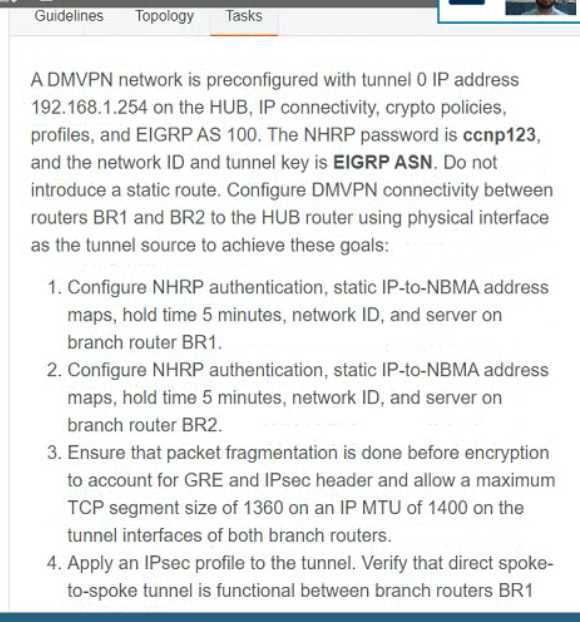
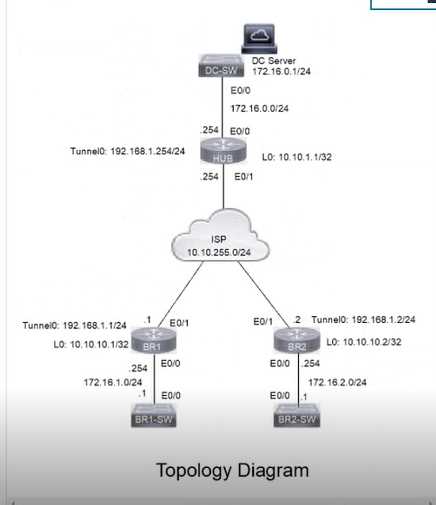
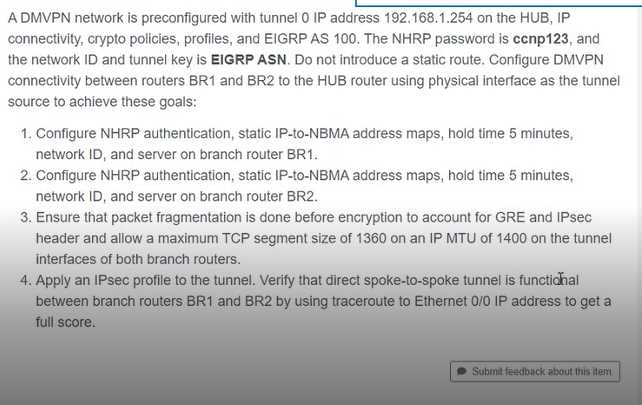
SIMULATION A DMVPN network is preconfigured with tunnel 0 IP address 192.168.1.254 on the HUB, IP connectivity, crypto policies, profiles, and EIGRP AS 100. The NHRP password is ccnp123, and the network ID and tunnel key is EIGRP ASN Do not introduce a static route. Configure DMVPN connectivity between routers BR1 and BR2 to the HUB router using physical interface as the tunnel source to achieve these goals: 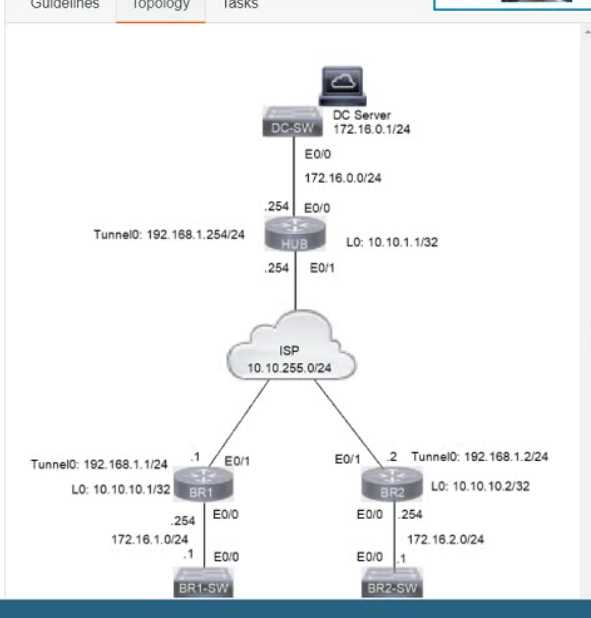
I think another angle here is that using the physical interface as the tunnel source also simplifies troubleshooting. If you chose a loopback or some other interface without direct physical connectivity, it would complicate verifying NHRP registrations and crypto associations. Plus, since the HUB’s tunnel IP is configured on tunnel0, the spokes must use their actual physical interfaces to establish proper IP reachability, which EIGRP relies on to exchange routes dynamically. This avoids any need for static routes while keeping the DMVPN mesh stable. So it's not just about reachability but also
Agreed, the physical interface as tunnel source ensures proper NHRP and crypto operation.
Another reason to pick the physical interface with direct connectivity is to avoid routing loops or drops in the DMVPN tunnel. If you pick an interface without proper reachability, the NHRP registrations won’t complete, so this confirms using the physical interface that actually reaches the HUB.
The tunnel source has to be the physical interface with IP reachability to the HUB, otherwise NHRP won't resolve correctly. Using any other interface won’t let the HUB recognize the spokes properly.
I think the key is matching the tunnel source with the interface that has a reachable IP. The physical interface used should be the one connected to the HUB so NHRP and crypto can work properly without static routes.
Does the tunnel source need to be a specific physical interface on BR1 and BR2?