Free Oracle 1Z0-1073-25 Actual Exam Questions
Dumps Box (DumpsBox) offers up-to-date practice exam questions for 1Z0-1073-25 certification exam which are developed and validated by Oracle subject domain experts certified in Oracle 1Z0-1073-25 . These practice questions are update regularly as we keep an eye on any recent changes in 1Z0-1073-25 syllabus, and when there is update our team quickly adjusts the questions. This commitment to providing the best quality exam prep material to certification aspirants is what makes DumpsBox.com the best certification exam prep website. On top of that, our strong, yet strictly moderated, community based feedback keeps the content clean and current. Each question has helpful community discussion that provides it extra perspective and introduces helpful resources for better exam preparation. This also saves students from other outdated practice questions or illicit exam dumps that can have adverse affects on career. Browse through our Oracle 1Z0-1073-25 exam questions and pass your exam on first try.
organizations handling high value goods.
What are the two types of inventory transactions recommended?
the items.
What action is recommended?
quantity of 100. Supply Chain Orchestration is unable to find an alternative source of supply to meet
this demand.
What will this supply line be grouped under?
ATP rule definition?
Back-to-Back Supply Creation Make Flow
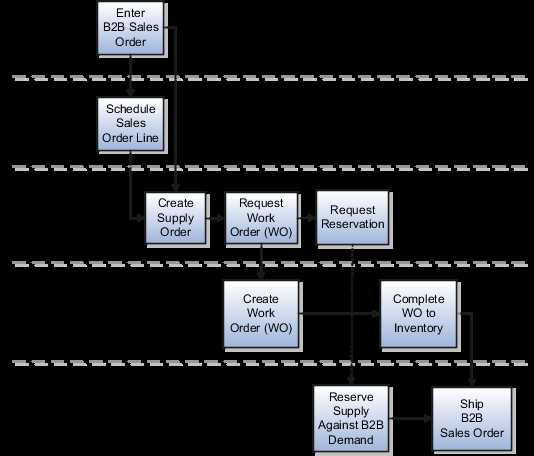
The supply document for a back-to-back make flow is a work order. As soon as the work order is
created in Oracle Fusion Cloud Manufacturing, it's tied to the back-to-back sales order in the form of
a reservation in inventory. The work order goes through the regular production process and the work
order completion transaction issues finished goods to inventory.
Note: Back-to-back flow is currently supported for only discrete manufacturing.
The following figure shows the back-to-back supply creation make flow.
Back-to-Back Supply Creation Transfer Flow
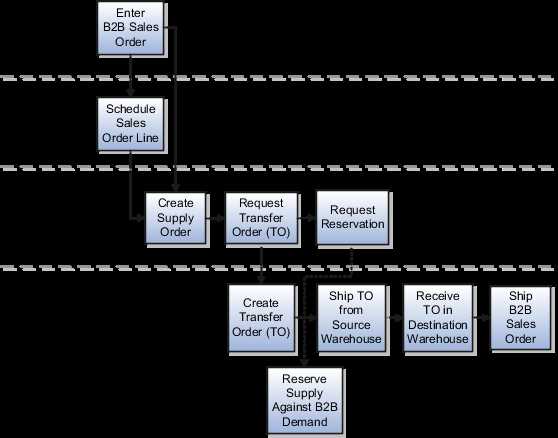
The supply document for a back-to-back transfer flow is a transfer order. The transfer order is created
in inventory and reserved against the back-to-back sales order. When the transfer order is ready to
be fulfilled, an interorganization shipment moves goods from the source organization to the
destination organization. An interorganization receipt in the destination organization (which is also
the fulfillment warehouse on the back-to-back sales order) creates on hand to fulfill the sales order.
The following figure shows the back-to-back supply creation transfer flow.
Back to Back fulfillment
Overview of Back-to-Back Fulfillment
The back-to-back fulfillment process is one in which specific sales order demand triggers supply
creation, and a link is established between the sales order and the supply.
Note: Back-to-back flow is currently supported only for discrete manufacturing.
The following figure provides a high-level flow diagram showing the back-to-back supply creation
and fulfillment process flow.
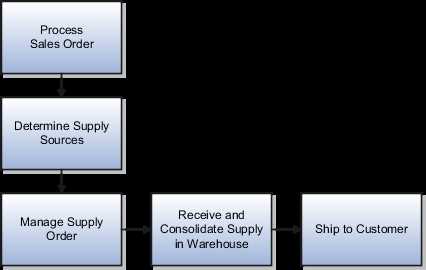
Back-to-back fulfillment is where supply is procured and then received at a warehouse only after an
order is placed.
The supply is reserved against a sales order until shipping.
This process provides support to create and link supply after a sales order is entered and scheduled,
allowing you to reduce your inventory while maintaining the ability to respond to customer
demands.
You create supply for a back-to-back order using one or more of the following back-to-back flows:
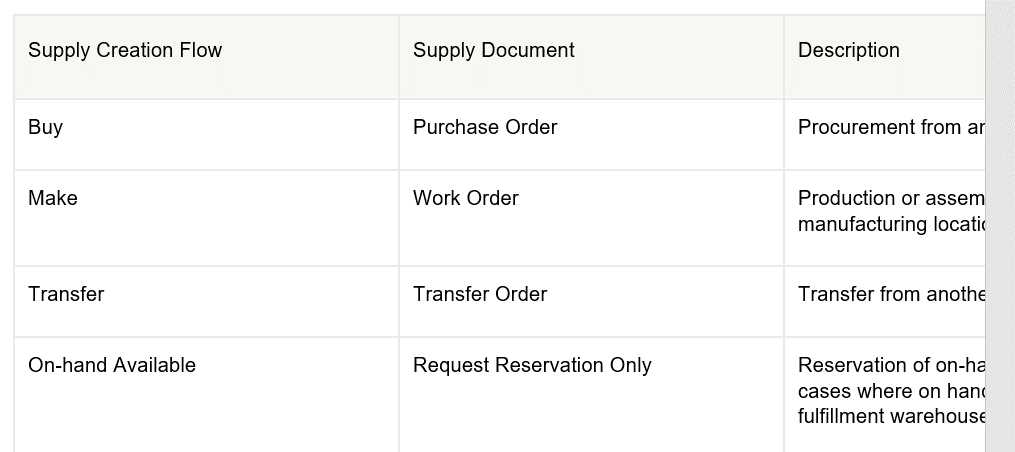
•
Buy: Procurement from an external supplier.
•
Make: Production in an internal manufacturing facility (includes in-house manufacturing and
contract manufacturing).
•
Transfer: Transfer from another warehouse.
•
On hand: Reservation of on-hand supply in the fulfillment organization.
Note: For information about back-to-back flows for contract manufacturing, see the Implementing
Contract Manufacturing chapter in this guide.
After the supply is received into the fulfillment warehouse, the back-to-back order is ready for
shipment to the customer.
Set Up Back-to-Back Transfer Flow
The topic explains what you need to do for setting up back-to-back transfer flow.
In the Oracle Product Information Management, ensure that the Item is Back-to-Back enabled.
In Oracle Global Order Promising:
1.
Set up a global sourcing rule with Type as Transfer from. Set the organization as the
organization requesting the transfer (example, Warehouse 1).
2.
Set up a local sourcing rule for the organization (in this example, Warehouse 1) Type as
Transfer from, from the organization that has the stock from which the transfer will take place
(example, Warehouse 2).
3.
Set up an ATP rule with the Promising Mode as Supply chain availability search.
4.
Ensure that the Supply chain availability search attributes are enabled according to your
requirements. For example, you might want the application to search components and resources to
include on-hand or in-transit Supply Types or fulfillment lines Demand Types.
5.
Set the ATP Rule Assignment as required.
6.
Set the sourcing assignments for the sourcing rules that you defined in steps 1 and 2.
7.
Ensure that the assignment level used for the global sourcing rule doesn't include any
Organization.
8.
Refresh and restart the Order Promising Server for ATP Rules and Sourcing.
With this setup:
•
The global rule is used to source the item from Warehouse 1 if there is stock available to
reserve.
•
If there's no stock on hand, Global Order Promising uses the local rule to transfer the item
from Warehouse 2 to Warehouse 1.
Back-to-Back Supply Creation Flows
You can set up Oracle Fusion Cloud applications that support back-to-back fulfillment to trigger
supply creations flows (buy, make, transfer, and on hand) after a sales order is entered and
scheduled.
Each variant of the back-to-back flow differs in the supply document that's created and the supply
execution application in which the document is created. Depending on the source of the item, supply
is provided from manufacturing, procurement, or inventory. Then, after the supply is received into
the fulfillment warehouse, the back-to-back order is ready for shipment to your customer.
The following table describes the supply creation flows and associated supply document supported
for each flow when using back-to-back fulfillment.
Back-to-Back Supply Creation Buy Flow
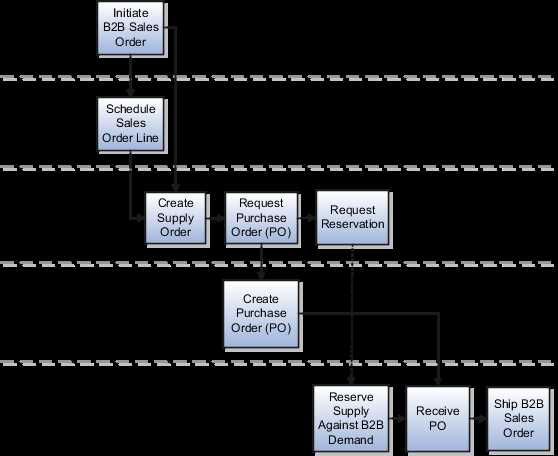
The supply document for a back-to-back buy flow is a purchase order. Based on supply
recommendations from Oracle Global Order Promising, a purchase order is created and reserved
against the sales order. When the purchase order is received by the supplier, on hand is created to
ship out the back-to-back sales order.
The following figure shows the back-to-back supply creation buy flow.
How Back-to-Back Fulfillment Works
The back-to-back process flow is one in which specific sales order demand triggers supply creation
and a link is established between the sales order and the supply.
An organization procures goods from an internal or external supplier or source to a specific
warehouse from where you can combine those goods with others to create a single shipment to the
customer.
Back-to-back supply processes are similar to regular supply processes that deliver supply to a
warehouse except for one difference; the back-to-back supply is always reserved to an order
management fulfillment line.
At a high level, you can think of back-to-back fulfillment as a three-step process:
1.
Creation of a customer sales order (source of demand).
2.
Creation and fulfillment of supply document (source of supply) to the fulfillment warehouse.
3.
Shipment of sales order from the fulfillment warehouse to the customer.
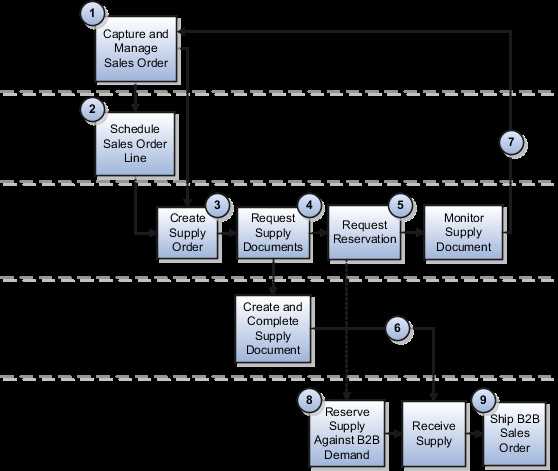
However, the back-to-back flow is truly a highly integrated process flow involving several Oracle
Fusion Cloud applications. The following figure shows the back-to-back process flow in detail. An
explanation for each number follows the figure.
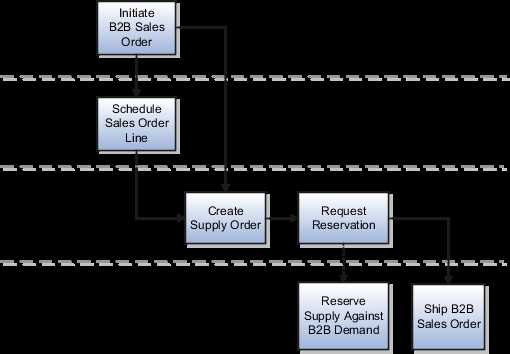
Back-to-Back Supply Creation On-Hand Flow
The back-to-back on-hand available (ATP) flow is the simplest in terms of the number of steps that
constitute the flow. This flow occurs where on hand supply is available in the fulfillment warehouse
for the ordered back-to-back item at the time of order promising. Because on-hand goods already
exist in the form of on hand, Oracle Supply Chain Orchestration directly sends a request to reserve
the on hand quantity against the back-to-back sales order. You can ship the sales order immediately
after the reservation is created.
The following figure shows the back-to-back supply creation on-hand flow.