Free NCARB Project-Planning-Design Actual Exam Questions s
Dumps Box (DumpsBox) offers up-to-date practice exam questions for Project-Planning-Design certification exam which are developed and validated by NCARB subject domain experts certified in NCARB Project-Planning-Design s . These practice questions are update regularly as we keep an eye on any recent changes in Project-Planning-Design syllabus, and when there is update our team quickly adjusts the questions. This commitment to providing the best quality exam prep material to certification aspirants is what makes DumpsBox.com the best certification exam prep website. On top of that, our strong, yet strictly moderated, community based feedback keeps the content clean and current. Each question has helpful community discussion that provides it extra perspective and introduces helpful resources for better exam preparation. This also saves students from other outdated practice questions or illicit exam dumps that can have adverse affects on career. Browse through our NCARB Project-Planning-Design s exam questions and pass your exam on first try.
Vertical steel trusses in the external walls
Light steel columns and flexible connections between columns and beams
Vertical steel trusses in the internal walls
Which structural design concept minimizes the cost of steel structure needed to resist wind and
earthquake loads in high-rise buildings?
accommodate a growing student population. An architectural firm has prepared schematic design
plans incorporating the school's increased programmatic needs, including an enlarged library,
cafeteria, and gymnasium; a secure courtyard; and additional space for administrative offices and
classrooms. The main entrance was relocated in order to improve the traffic and pedestrian flow at
the beginning and end of the school day, and additional parking was provided to comply with current
zoning requirements.
The existing single-story masonry building was built in 1950. Two small additions were built later: the
north addition will be kept and repurposed, but the south addition will be demolished. The building
contains asbestos and lead in roof soffits, floor tiles, pipe insulation, and window paint. All existing
mechanical systems need to be replaced; new systems have not been selected.
Considerations for the renovation include:
•
The relocated front entrance must be easily recognizable, highly visible, and secure.
•
Interior and exterior materials need to be durable and maintainable in order to withstand
frequent student abuse, but also economical due to strict budget limitations.
•
Good indoor air quality and increased energy efficiency are priorities for the selection of
mechanical equipment.
After completion, the entire school should look uniform, without a distinctive difference between
the existing building and new addition.
Building information:
•
Construction Type is II-B.
The following resources are available for your reference:
•
Existing Plans, including site and floor plans
•
Proposed Plans, including site and floor plans
•
Cost Analysis
•
Zoning Ordinance Excerpts, for off-street parking requirements
•
IBC Excerpts, showing relevant code sections
•
ADA Standards Excerpts, showing relevant sections from the ADA Standards for Accessible
Design
The building contains asbestos and lead in roof soffits, floor tiles, pipe insulation, and window paint.
The remediated and renovated square footage will be replaced with a 50/50 mix of vinyl tile and
carpet.
What is the total installed cost for the area of vinyl tile?
outpatient medical clinic. The clinic is located within a mixed-use development governed by
a City-approved Planned Development (PD) document. The medical clinic design utilizes
standardized departmental layouts and includes outpatient clinics, as well as treatment spaces,
administrative spaces and public/lobby spaces.
The site needs to accommodate four different vehicular traffic flows: patient traffic, staff traffic,
service and delivery traffic, and emergency services traffic. In addition, a pedestrian plaza
must connect to the mixed-use development sidewalks. The plaza must provide space for bicycle
parking and will serve as the future bus stop.
The site design addresses several challenges related to building orientation. The southeast facade,
with excellent visibility from the highway, is the location of all service equipment. The
building entrance faces northwest, convenient to the parking but not visible from the highway.
The client believes future patient volumes will outgrow the clinic. The PD document allows for a
planned Phase 2 development on the adjacent vacant site to the southwest. Phase 2 would
include a second building (2 story, 80,000 BGSF) and/or a parking deck.
Other considerations for the project include:
Protected tree requirements are defined in the PD document.
Easy pedestrian access must be provided from Sycamore Boulevard.
All required parking for the clinic must be accommodated on site.
Programmed area includes 109,450 Departmental Gross Square Feet (DGSF) / 130,184 Building
Gross Square Feet (BGSF).
Exterior material percentages are dictated by the PD document and shall not exceed specific
percentages for Primary and Secondary Finishes.
All service equipment needs to be screened; see PD document for restrictions.
Signage opportunities are important to the client.
Acoustical privacy is a concern of the healthcare system.
The following resources are available for your reference:
Drawings, including a perspective, plans, and exterior elevations
Building Program, including client's departmental program and detailed program for Treatment 01
(Infusion)
Exterior Material Cost Comparisons
Planned Development Document
IBC Excerpts, showing relevant code sections
ADA Excerpts, showing relevant sections from the ADA Standards for Accessible Design
Pink granite is specified as an exterior material for the outpatient medical clinic. The owner directs
the architect to propose alternate, less expensive materials to be used in lieu of the pink granite.
Which of the following materials should be considered to reduce cost? Check the two that apply.
grade. The building site is located less than 1 mile from the coastline. A site survey indicates that the
average site elevation is 5'-0" above sea level.
Based on the site-specific conditions, which four issues should the architect address in the design?
Check the four that apply.
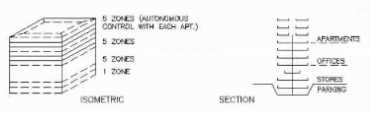
The multipurpose building shown is located in a cold-winter, mild-summer climate.
Which of the following is the best location for the mechanical equipment floor?
Which of the following effects would this request have on the standard light design?
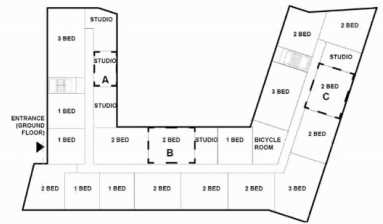
Refer to the exhibit (residential floor
plan with three outlined elevator core locations A, B, C).
During design development, an owner has chosen an elevator that does not fit in the location
previously selected for the two-car elevator core. The elevator core should be near the main
entrance lobby and centrally located. The minimum program requirements for each residential floor
are the following:
One bicycle room
Five studios
Five 1-bed units
Eight 2-bed units
Three 3-bed units
Which outlined location meets the requirements?
outpatient medical clinic. The clinic is located within a mixed-use development governed by
a City-approved Planned Development (PD) document. The medical clinic design utilizes
standardized departmental layouts and includes outpatient clinics, as well as treatment spaces,
administrative spaces and public/lobby spaces.
The site needs to accommodate four different vehicular traffic flows: patient traffic, staff traffic,
service and delivery traffic, and emergency services traffic. In addition, a pedestrian plaza
must connect to the mixed-use development sidewalks. The plaza must provide space for bicycle
parking and will serve as the future bus stop.
The site design addresses several challenges related to building orientation. The southeast facade,
with excellent visibility from the highway, is the location of all service equipment. The
building entrance faces northwest, convenient to the parking but not visible from the highway.
The client believes future patient volumes will outgrow the clinic. The PD document allows for a
planned Phase 2 development on the adjacent vacant site to the southwest. Phase 2 would
include a second building (2 story, 80,000 BGSF) and/or a parking deck.
Other considerations for the project include:
Protected tree requirements are defined in the PD document.
Easy pedestrian access must be provided from Sycamore Boulevard.
All required parking for the clinic must be accommodated on site.
Programmed area includes 109,450 Departmental Gross Square Feet (DGSF) / 130,184 Building
Gross Square Feet (BGSF).
Exterior material percentages are dictated by the PD document and shall not exceed specific
percentages for Primary and Secondary Finishes.
All service equipment needs to be screened; see PD document for restrictions.
Signage opportunities are important to the client.
Acoustical privacy is a concern of the healthcare system.
The following resources are available for your reference:
Drawings, including a perspective, plans, and exterior elevations
Building Program, including client's departmental program and detailed program for Treatment 01
(Infusion)
Exterior Material Cost Comparisons
Planned Development Document
IBC Excerpts, showing relevant code sections
ADA Excerpts, showing relevant sections from the ADA Standards for Accessible Design
Refer to the exhibit.
What is the required wall finish for rooms 1201 through 1206 on the first floor?
outpatient medical clinic. The clinic is located within a mixed-use development governed by
a City-approved Planned Development (PD) document. The medical clinic design utilizes
standardized departmental layouts and includes outpatient clinics, as well as treatment spaces,
administrative spaces and public/lobby spaces.
The site needs to accommodate four different vehicular traffic flows: patient traffic, staff traffic,
service and delivery traffic, and emergency services traffic. In addition, a pedestrian plaza
must connect to the mixed-use development sidewalks. The plaza must provide space for bicycle
parking and will serve as the future bus stop.
The site design addresses several challenges related to building orientation. The southeast facade,
with excellent visibility from the highway, is the location of all service equipment. The
building entrance faces northwest, convenient to the parking but not visible from the highway.
The client believes future patient volumes will outgrow the clinic. The PD document allows for a
planned Phase 2 development on the adjacent vacant site to the southwest. Phase 2 would
include a second building (2 story, 80,000 BGSF) and/or a parking deck.
Other considerations for the project include:
Protected tree requirements are defined in the PD document.
Easy pedestrian access must be provided from Sycamore Boulevard.
All required parking for the clinic must be accommodated on site.
Programmed area includes 109,450 Departmental Gross Square Feet (DGSF) / 130,184 Building
Gross Square Feet (BGSF).
Exterior material percentages are dictated by the PD document and shall not exceed specific
percentages for Primary and Secondary Finishes.
All service equipment needs to be screened; see PD document for restrictions.
Signage opportunities are important to the client.
Acoustical privacy is a concern of the healthcare system.
The following resources are available for your reference:
Drawings, including a perspective, plans, and exterior elevations
Building Program, including client's departmental program and detailed program for Treatment 01
(Infusion)
Exterior Material Cost Comparisons
Planned Development Document
IBC Excerpts, showing relevant code sections
ADA Excerpts, showing relevant sections from the ADA Standards for Accessible Design
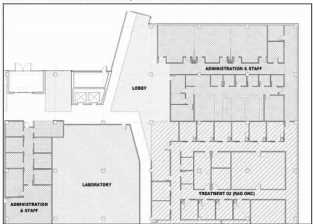
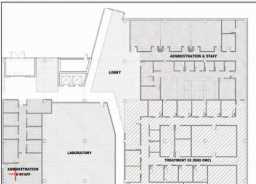
Which of the following design solutions best addresses the client’s concerns related to building
orientation, vehicular circulation, and future expansion?
to select structural materials for an office building by doing which one of the following?
or adapted plantings on-site?
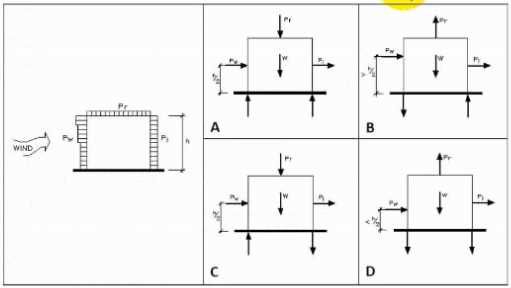
Refer to the exhibit (building subjected to wind with force diagrams A, B, C, D).
Which of the force diagrams shown correctly represents the resultant wind forces causing an
overturning effect on the building and the forces that resist this overturning effect? (Direction and
point of application of forces are to be considered; magnitude of forces is not.)
to improve building quality and reduce energy costs?
Refer to the exhibit. 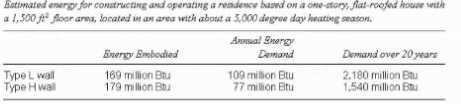 Refer to the exhibit (table showing energy embodied and annual energy demand for Type L and Type H walls). In the table, Type L wall is lightly insulated and Type H wall is heavily insulated. Approximately how many heating seasons would it take to recover the extra energy involved in selecting the Type H construction?