Free COMPTIA Datasys+ DS0-001 Actual Exam Questions
Dumps Box (DumpsBox) offers up-to-date practice exam questions for DS0-001 certification exam which are developed and validated by CompTIA subject domain experts certified in COMPTIA Datasys+ DS0-001 . These practice questions are update regularly as we keep an eye on any recent changes in DS0-001 syllabus, and when there is update our team quickly adjusts the questions. This commitment to providing the best quality exam prep material to certification aspirants is what makes DumpsBox.com the best certification exam prep website. On top of that, our strong, yet strictly moderated, community based feedback keeps the content clean and current. Each question has helpful community discussion that provides it extra perspective and introduces helpful resources for better exam preparation. This also saves students from other outdated practice questions or illicit exam dumps that can have adverse affects on career. Browse through our COMPTIA Datasys+ DS0-001 exam questions and pass your exam on first try.
provide the best write performance?
Maybe D. RAID 10 splits data across disks without parity overhead, so it avoids the slowdowns that RAID 5 and 6 face during writes. RAID 3’s single parity disk can also cause a bottleneck.
D, since RAID 10 just writes data twice without complex parity calculations.
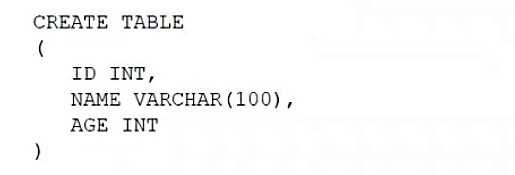
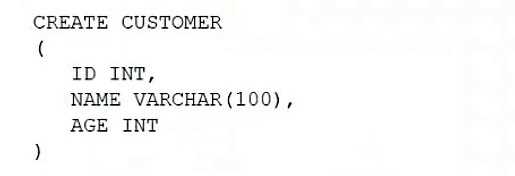
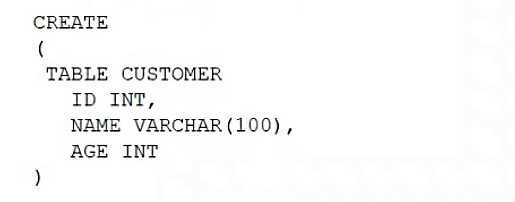
A database administrator is creating a table, which will contain customer data, for an online business. Which of the following SQL syntaxes should the administrator use to create an object?
A)
B)
C)
D)
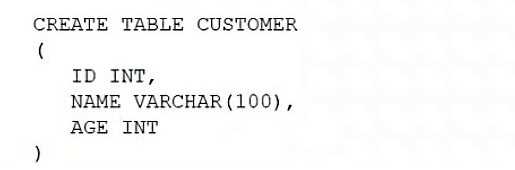
Option C seems fine too if the focus is just on creating the table structure.
C imo, since it looks like it covers the basic table structure without overcomplicating things. Sometimes the question just wants the fundamental syntax to create the table, rather than all the bells and whistles. Options with constraints might be overkill if the question doesn’t specify them explicitly. Also, A and B don’t seem as complete as C does for a straightforward create table command. So, if we’re focusing on the essential SQL create syntax without extra constraints, C fits better.
room? (Choose two.)
It’s C and F for me. Fire suppression systems actually stop things like fires from destroying the hardware, and cooling systems prevent overheating, which is a common cause of physical damage in server rooms. Access controls like A or E help prevent tampering or theft but don’t directly protect against physical damage from environmental factors. So if the question is about protecting the appliance itself from harm, environmental controls seem more crucial here.
Maybe A and E make more sense here since they stop unauthorized people from physically messing with the appliances. Fire suppression and cooling protect from environmental risks, but access controls directly block human-caused damage.
for the database administrator to use?
It’s C also, but thinking from another angle—word processors (A) and spreadsheets (B) just aren’t built for diagramming complex relationships clearly. HTML editors (D) are even less relevant since they’re for web coding, not modeling. UML tools are designed specifically for this kind of work, with features that let you easily update entities and relationships without messy workarounds. So, choosing C saves time and reduces errors when updating an ERD.
Makes sense to go with C here. UML tools have built-in support for things like relationships and entities, which makes updating ERDs straightforward. Word processors or spreadsheets just don’t handle those kinds of diagrams well, and HTML editors are totally off for this use case.
applied to the new database?
B/C? Patches usually happen during upgrading, but some setups patch while provisioning.
It’s B because upgrading specifically involves applying patches and updates to bring the database to the latest version, which fits the description better than just setting it up or modifying it later.
(Choose two.)
B/D? Master handles system-level info, and Model is the template for new DBs, so they’re definitely created by default. Root and Log don’t sound like standard SQL Server databases, and View and Index aren’t even databases, just objects within them. So B and D are the logical picks here.
It’s B and D for sure. Master is the main system database, and Model serves as a template for new databases. The others don’t fit standard default databases in SQL Server.
backup files are stored on the server's disks.
Which of the following is the best action for the administrator to take?
It’s A because moving backup files to external disks immediately frees up space without deleting anything, which keeps data safe while resolving the disk space issue quickly. Deleting backups can be risky if not carefully done.
Probably C here. Sticking to the backup retention policy makes the most sense since it balances freeing space with keeping necessary backups. Just deleting all but the latest (D) might be too risky if older backups are still needed for recovery or compliance. Moving files off to external disks (A) would be ideal but as others said, we don’t know if that’s an option. Deleting classified backups (B) seems counterintuitive since those are usually more sensitive and important to keep secure, not delete. So following the policy is a safer bet.
Maybe D isn’t wrong technically, it just doesn’t filter anything but the syntax is fine. I see the point about C’s missing space, but most SQL engines are pretty forgiving with that and treat SELECT* as SELECT *. So B definitely stands out since it’s missing the FROM clause completely, which is required for a valid query. That one can’t run at all, so that’s where I’d put the error.
B/D? B misses FROM, so that’s an obvious error. D is technically correct syntax but might be pointless without a WHERE clause if the question implies filtering. Still, B is clearly wrong.
following properties addresses this concern?
It’s A because durability ensures data stays saved even if power fails immediately after commit.
Chris L.: Probably A since durability ensures data stays safe even if the system crashes later.
API?
It’s B, object storage works with REST APIs for data retrieval.
server:
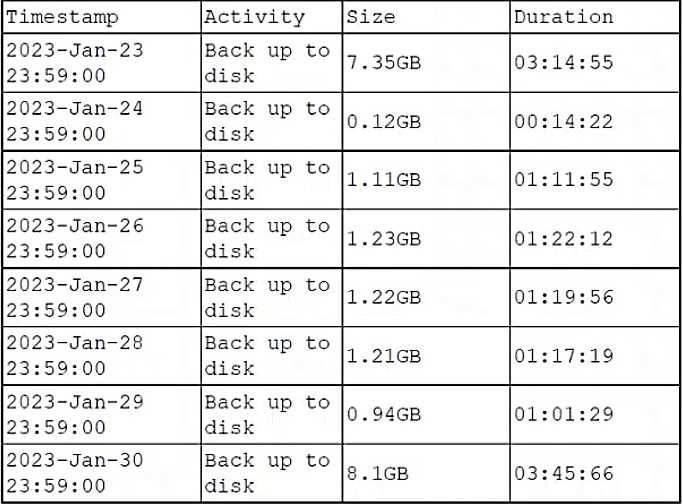
Which of the following best describes this backup plan?
A. The log entries show one large backup followed by smaller ones that seem to capture changes, which fits monthly full with daily differentials. The size difference between the first and subsequent backups looks too big for daily full or incremental. Plus, weekly full would probably show more regular large backups, so monthly full with daily differential seems like the best fit here.
A/B? The logs show large daily backups, which rules out incremental (D). But if the full backup happens monthly, daily differentials make sense (A). Just not enough detail to totally exclude B.
contains sensitive dat
a. Which of the following should the database administrator do before giving the developers access
to the environment?
B imo, removing sensitive data outright is the safest bet if devs don’t actually need it. Masking still carries some risk if done poorly, but deleting sensitive info leaves no chance for leaks.
C/D? Encrypting connections (D) is important but doesn’t prevent exposure of data itself, so it feels more like a secondary step. Masking (C) limits real data exposure while keeping devs able to work realistically.
coming from specific IP addresses. Which of the following can be used to configure IP addresses to
allow access to the database?
Option B, since firewalls are the usual way to restrict IP access at the network level.
Maybe A, since the question might imply specifying fixed IPs allowed to access the database. Using static IPs for allowed clients could be part of the setup to restrict access correctly.
commands should a database administrator use for this task?
Option C since you need to create the user before any authentication setup.
It’s C because you can’t authenticate without the user existing first. ALTER USER changes details but doesn’t create the account needed for login. So creating the user is step one.
users in order to facilitate ongoing reporting. However, some columns in each table are restricted,
and users should not be able to see the values in these columns.
Which of the following is the best action for the administrator to take?
A, since stored procedures can control exactly what data users access.
It’s B since views can restrict columns without changing table permissions.