Free Cisco 300-620 Actual Exam Questions - Question 5 Discussion
An engineer is configuring a VRF for a tenant named Cisco. Drag and drop the child objects on the left
onto the correct containers on the right for this configuration.
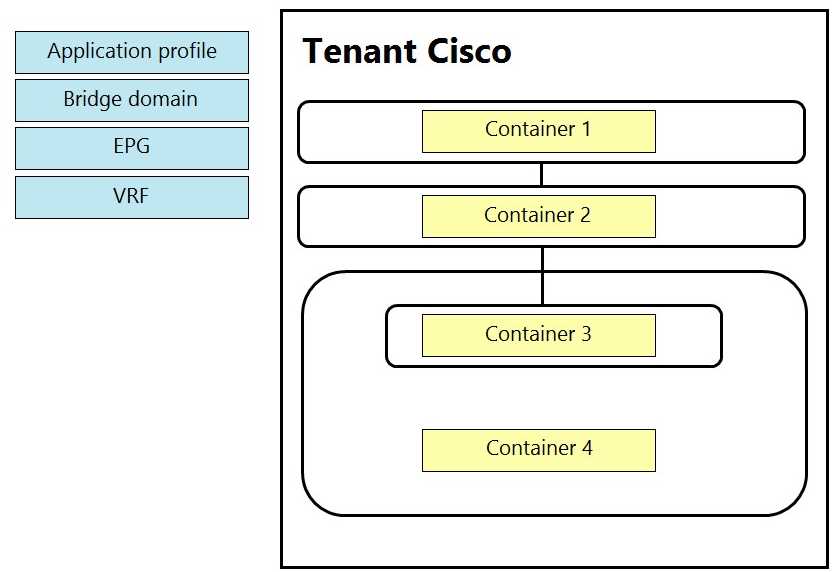
I’m guessing this is Cisco ACI based on the tenant naming and VRF context, so I’d put the bridge domain and subnet inside the VRF container since that’s how ACI organizes those. Route-targets usually go under the VRF too, but not inside the subnet or bridge domain. The tenant contains the VRF, which then contains those child objects. If it was IOS XE, the hierarchy would be different since it’s more flat and less object-oriented. Without explicit platform info, I’d trust the tenant > VRF > bridge domain/subnet ordering here.
The tenant is the highest level, so child objects shouldn’t go directly under it. Route-targets and RD belong inside the VRF container since they configure VRF-specific properties, not the tenant itself.
I think the key here is remembering the hierarchy: the tenant is the top level, then VRFs are inside tenants, and child objects like route-targets and RDs sit inside the VRFs. So you can rule out putting route-targets or RDs directly under the tenant container. Even if the VRF name matches the tenant, it’s still a separate container for those specific settings. That matches option B better, where these child items go under the VRF, not directly under the tenant. The platform might change details, but this structure usually stays consistent.
The child objects like route-targets and RD should go under the VRF container itself, not directly under the tenant. The tenant holds VRFs, and VRFs hold these specifics. So, matching each child to the right level matters.
Looks like the VRF name matches tenant, so child objects likely grouped under tenant container.
Does the question specify which platform or IOS version this VRF configuration is for? That might affect how the child objects are grouped.