Free Cisco 300-620 Actual Exam Questions - Question 11 Discussion
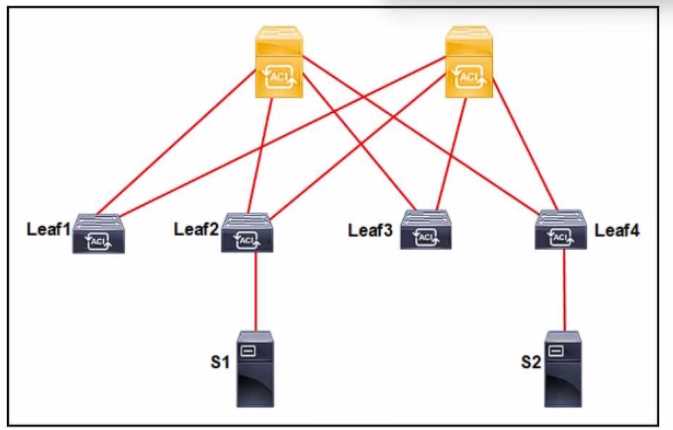
An application called App_1 is hosted on the server called S1. A silent host application. App_2. is
hosted on S2. Both applications use the same VLAN encapsulation, which action forces Cisco ACI
fabric to learn App_2 on ACI leaf 2?
A imo, dropping multi-destination flooding stops broadcasts that would normally help learn App_2, so it won’t be learned. That makes sense since it’s silent and won’t send anything to trigger learning otherwise.
C/D? If App_2 never sends traffic, flooding unknown unicast (C) might not help, but optimized flood for L3 unknown multicast (D) could trigger learning via multicast mechanisms. Both could make sense depending on traffic type.
D imo, because optimized flooding for L3 unknown multicast can help with host discovery in silent host scenarios, especially when routing plays a role. It might trigger learning without relying on actual unicast traffic.
Makes sense that C is right since flooding unknown unicast helps when the host is silent and not sending updates. If the leaf never gets any frame from App_2, it won’t learn otherwise. So, C.
It’s C for me. Since both apps are on the same VLAN and the issue is about learning the location of App_2 on leaf 2, enabling L2 Unknown Unicast to Flood makes sense. This setting forces unknown unicast traffic to be flooded across the fabric, helping the leaf switch learn where the host is. The other options deal more with multicast or proxy routing, which doesn’t directly address learning the host location in this scenario. So flooding unknown unicasts is the straightforward way to get the fabric to know about App_2 on leaf 2.
B