Free Cisco 300-430 Actual Exam Questions
Dumps Box (DumpsBox) offers up-to-date practice exam questions for 300-430 certification exam which are developed and validated by Cisco subject domain experts certified in Cisco 300-430 . These practice questions are update regularly as we keep an eye on any recent changes in 300-430 syllabus, and when there is update our team quickly adjusts the questions. This commitment to providing the best quality exam prep material to certification aspirants is what makes DumpsBox.com the best certification exam prep website. On top of that, our strong, yet strictly moderated, community based feedback keeps the content clean and current. Each question has helpful community discussion that provides it extra perspective and introduces helpful resources for better exam preparation. This also saves students from other outdated practice questions or illicit exam dumps that can have adverse affects on career. Browse through our Cisco 300-430 exam questions and pass your exam on first try.
the MSE from controllers. Which protocol must be allowed to reach the MSE from the controllers?
I’m thinking C might be worth considering since CAPWAP is the main protocol for controller to access point communication, and maybe it carries alarm info too? But then again, alarm info is usually more management-focused, not just control plane data like CAPWAP handles. So, is CAPWAP actually designed to carry alarms to MSE or just the usual AP data?
B imo, NMSP is the dedicated protocol between controllers and MSE for alarms.
OEAP at remote teleworker locations. All configuration has been completed on the controller side,
but the network readiness is pending. Which two configurations must be performed on the firewall
to allow the AP to join the controller? (Choose two.)
It’s definitely D since CAPWAP needs UDP 5246 and 5247 open to establish control and data channels. E makes sense too because OEAPs usually require those additional UDP ports for communication, so both are key.
Option D and E, since CAPWAP uses 5246/5247 and OEAP likely needs 12222/12223 too.
FlexConnect AP Upgrade setting will be used. One AP of each model with the lowest MAC address in
the group must receive the upgrade directly from the controller. Which action accomplishes this
direct upgrade?
Option C seems right; splitting APs into different groups isolates upgrades per model.
A imo, removing APs from the group might force the controller to handle upgrades individually, so the one with the lowest MAC could get upgraded directly. It’s a simpler way to isolate the APs for upgrade control.
012345678-WLAN is used for guest wireless
clients. Management needs location analytics to
determine popular areas. CMX must track only associated clients. What must be selected on the
CMX server settings?
A imo, filtering out probing clients fits the associated-only tracking need.
A Excluding probing clients makes sense since it filters out devices that aren’t connected, ensuring only associated ones are tracked for location analytics. That fits the requirement perfectly.
issues on the wireless network. To accomplish this goal, the engineer must set up a reliable way for a
Media Stream to work between Cisco FlexConnect APs. Which feature must be enabled to
guarantee delivery?
D, because converting multicast to unicast ensures reliable delivery on wireless networks.
A imo, since the question doesn’t clarify if the stream is multicast, Unicast Direct ensures reliable delivery over wireless by optimizing unicast streams directly between APs without relying on multicast assumptions.
dynamically assign groups of users to specific IP subnets. If the subnet assigned to a client is available
at the remote site, then traffic must be offloaded locally, and subnets are unavailable at the
remote site must be tunneled back to the WLC. Which feature meets these requirements?
Maybe B. FlexConnect local authentication lets the AP handle local switching when subnets are available and tunnel otherwise, fitting the dynamic offload and tunnel needs here.
C imo, VLAN-based central switching handles local vs tunneled traffic better here.
It’s B for me. Bronze works well because guest services usually don’t need high QoS—just something basic to keep things running smoothly without hogging bandwidth. Silver and above seem a bit much for guests who aren’t priority users. Plus, bronze is often used for less critical traffic, which fits the guest profile better. If QoS needs to be economical and not overcomplicated, bronze sounds right.
I think D fits better because guest services typically need stable and consistent QoS without taking resources away from higher-priority users. Silver strikes that middle ground, offering decent performance without being overkill. Bronze might be too low if guests expect smooth access.
to determine the location of a wireless device?
It’s D because angle of arrival literally means measuring the angle at which the signal hits the antenna, so angle of incidence fits that definition better than triangulation or signal strength.
B imo, because angle of arrival relies on combining angles from multiple sources to find location.
implement location tracking. The administrator is having trouble establishing connectivity between
one of the WLCs through NMSP. What must be configured to establish this connectivity? (Choose
two.)
B, C - Without opening port 16113 on the firewall, the NMSP traffic won’t get through, and enabling NMSP on the WLC is mandatory for the link to work at all. Both are needed for connectivity.
It’s B for sure since the firewall blocking port 16113 will stop NMSP communication, and C because you have to enable NMSP on the WLC itself for any connection. Without both, it won’t work.
looks at the floor map where the AP that
detected the rogue is located. The map is synchronized
with a mobility services engine that determines that the rogue device is actually inside the campus.
The engineer determines that the rogue is a security threat and decides to stop if from broadcasting
inside the enterprise wireless network. What is the fastest way to disable the rogue?
C/D? Marking as malicious (D) seems important but containment (C) actually stops the rogue’s broadcasts fastest once it's classified. Without containment, just marking doesn’t disable it immediately.
I think D might be a necessary step before containment; you usually have to mark the rogue as malicious to allow containment actions. So, starting with D seems faster in this case. D
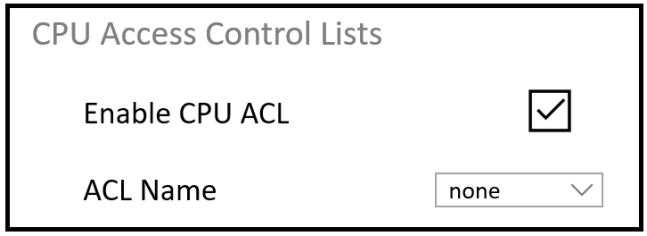
An engineer must restrict some subnets to have access to the WLC. When the CPU ACL function is
enabled, no ACLs in the drop-down list are seen. What is the cause of the problem?
Maybe C makes the most sense since normal ACLs don’t appear unless they’re created specifically as CPU ACLs. Just creating an ACL isn’t enough here.
Could it be that the ACLs exist but aren’t linked to the correct interface or context? If they aren’t tagged as CPU ACLs, they might not appear, so maybe both A and C have some merit depending on how the device handles ACL types.
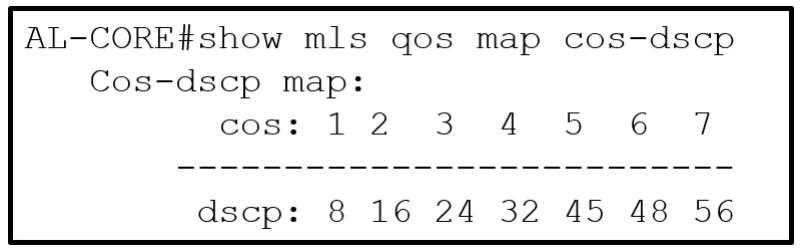
Which COS to DSCP map must be modified to ensure that voice traffic is tagged correctly as it
traverses the network?
D/B? The voice traffic usually uses COS 5 and DSCP 46 for EF, so adjusting COS 5 to DSCP 46 makes sense. COS 3 mapping to DSCP 26 seems unrelated to voice quality.
Maybe A, since COS 6 usually maps to voice priority DSCP 46.
and each handles around 500 wireless clients. How should the CAPWAP multicast group address be
assigned during configuration?
A imo, having each WLC use a unique multicast group makes sense since they’re in different physical locations and managing separate client sets. This way, multicast traffic is contained and doesn’t cause unnecessary broadcast or interference between sites. Also, since they handle a large number of clients, separating groups avoids congestion.
C doesn’t feel right because sharing the same multicast group could mix traffic and cause confusion. So isolating by assigning different group addresses per WLC seems like the best practice here.
A, to prevent multicast traffic from one WLC reaching the other’s clients.
for packets received, and then have the differentiated services code point set to match when it is
resent to another port on the switch. Which configuration is required in the network?
Isn’t the wireless voice traffic already tagged with CoS before hitting the switch port?
D. The voice traffic class from wireless usually gets tagged with CoS first, so trusting CoS on the controller switch port ensures the correct queue order based on that. Then it can map to the proper DSCP when sending to other ports. Trusting DSCP (C) might not work well since the initial classification starts with CoS in wireless. So, D fits better with the way wireless voice traffic is handled end to end.
WLAN. Which output is produced when the Adaptive wIPS Top 10 AP report is run?
Makes sense to pick C since sniffer mode APs are meant to capture wIPS events, and the report focuses on the top 10 APs by event count, not just a list. So C it is.
C The report highlights the top 10 sniffer mode APs with the most wIPS events, not monitor mode ones, since sniffers capture more detailed traffic for security alerts.